Building a green home is more than just a chance to make a positive impact on the environment—it’s an opportunity to create a space that is efficient, sustainable, and healthy for your family. As homeowners become more eco-conscious, understanding sustainable construction practices is key to making informed decisions. Let’s dive into the essentials of building a green home and explore the practices that can make it happen.
Understanding Sustainable Construction
Sustainable construction involves using materials and practices that minimize environmental impact and enhance resource efficiency. It’s not just about using eco-friendly materials; it’s about an entire approach that integrates environmental, social, and economic considerations into every aspect of a build.
Key Principles of Sustainable Construction
The Guiding Principles for Sustainable Federal Buildings outline important elements that can be adapted to residential construction. These include:
- Integrated Design: Ensuring all aspects of the building process work together for sustainability.
- Energy Optimization: Using energy-efficient technologies and renewable energy sources.
- Water Conservation: Implementing systems to reduce water use.
- Indoor Environmental Quality: Enhancing air quality and natural light.
- Reduced Material Impact: Using recycled or sustainable materials.
- Building Resilience: Designing for durability and adaptability to climate change.
Sustainable Site Selection
The location of your home plays a critical role in its environmental impact. Choosing a site close to urban areas reduces the need for long commutes, decreasing your carbon footprint. The EPA’s Smart Growth Guidelines highlight the importance of location efficiency in green building projects.
Features to Consider
- Public Transportation Access: Proximity to public transit options.
- Community Amenities: Nearby schools, parks, and shopping to reduce the need for travel.
- Environmental Impact: Avoid building in sensitive ecological areas.
Eco-Friendly Building Materials
Choosing the right materials is crucial in green home construction. Opt for materials that have a low environmental impact and consider their lifecycle from production to disposal.
Popular Sustainable Materials
- Bamboo: A rapidly renewable resource ideal for flooring.
- Recycled Steel: Durable and reduces the need for new metal mining.
- Reclaimed Wood: Salvaged wood reduces deforestation and adds vintage charm.
- Insulating Concrete Forms (ICFs): Provide excellent insulation and reduce energy consumption.
For more tips on selecting sustainable materials, visit the Whole Building Design Guide.
Energy Efficiency and Technology
Integrating energy-efficient systems and smart technology can significantly reduce a home’s energy usage.
Top Energy-Saving Technologies
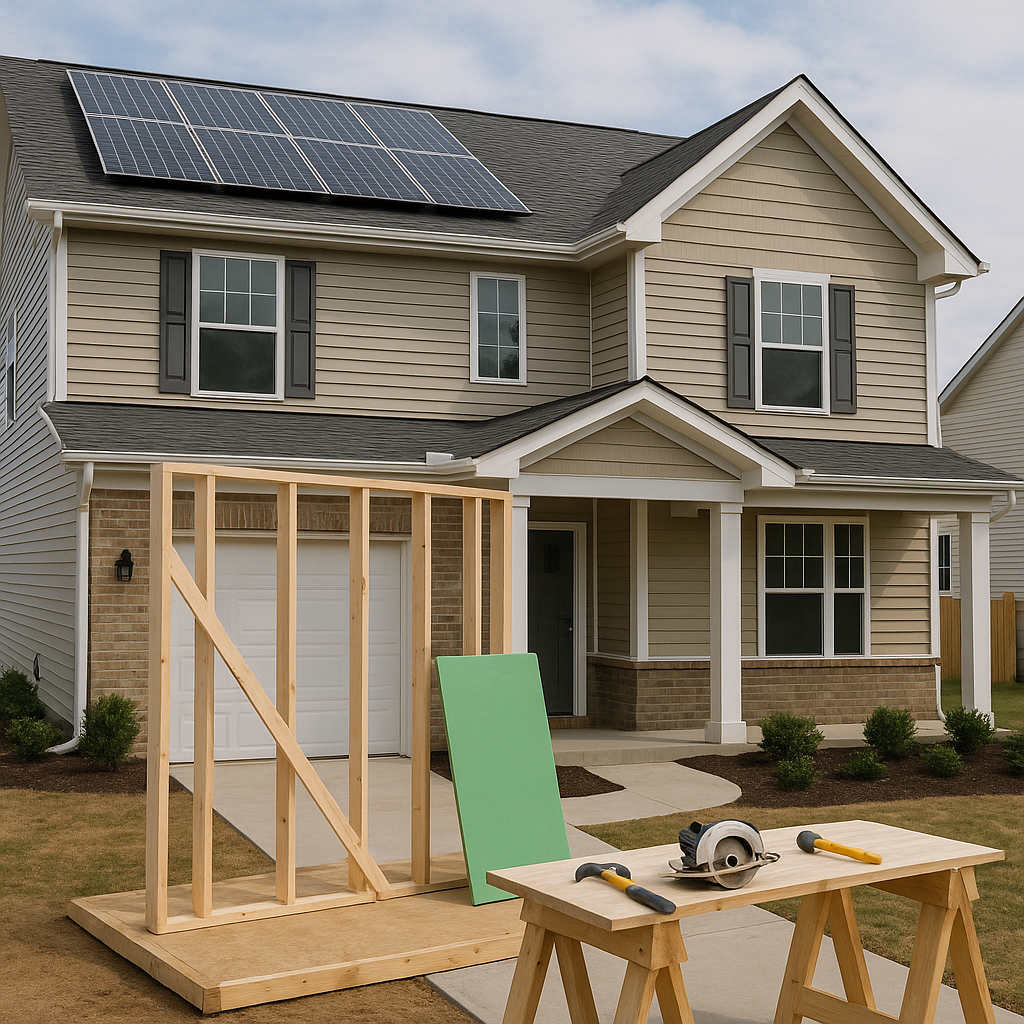
- Solar Panels: Harness renewable energy and potentially reduce energy bills.
- Energy Star Appliances: Utilize less energy compared to standard appliances.
- High-Efficiency HVAC Systems: Offer superior temperature control with minimal energy use.
- Smart Home Systems: Automate and optimize energy usage with smart thermostats and lighting.
The EPA’s Smart Growth Guidelines can provide additional insights on integrating energy-efficient technologies.
Water Efficiency Measures
Conserving water is another crucial aspect of sustainable homebuilding. Implementing water-saving measures can greatly reduce your environmental impact and utility bills.
Water-Saving Practices
- Low-Flow Fixtures: Install faucets and toilets that use less water.
- Rainwater Harvesting: Collect rainwater for irrigation and non-potable uses.
- Smart Irrigation Systems: Use weather data to optimize watering schedules.
Conclusion: Take the First Step Towards a Green Home
Building a green home is a thoughtful choice that benefits both the environment and your family. By focusing on sustainable practices, energy efficiency, and mindful material selection, you’re not only creating a healthier living space but also contributing to a more sustainable future. Ready to start your green home journey? Visit Contractors Candy for more resources and expert advice. Together, we can build a brighter, more sustainable future.