An outdoor kitchen can turn a backyard, patio, deck, or covered porch into one of the most functional areas of the home. Instead of limiting outdoor cooking to occasional summer grilling, a well-planned outdoor kitchen can support family dinners, weekend gatherings, holiday hosting, game-day meals, quiet evenings, and everyday convenience through multiple seasons.
But creating an outdoor kitchen that works year-round takes more planning than placing a grill on the patio. Homeowners need to think about location, weather protection, ventilation, materials, appliances, storage, lighting, utilities, safety, maintenance, and how the space will be used in different seasons.
A good outdoor kitchen should be beautiful, but it also needs to be practical. It should make cooking easier, keep guests comfortable, hold up to weather, and connect naturally with the rest of the home. Whether you want a simple grill station or a fully equipped outdoor cooking area, thoughtful planning can help the space stay useful beyond warm summer weekends.
Here is how to plan an outdoor kitchen that works year-round.
Start With How You Want to Use the Space
Before choosing appliances or materials, think about how you actually want to use the outdoor kitchen. A homeowner who grills burgers once a week needs a different setup than someone who hosts large gatherings, smokes meats, makes pizza, serves drinks, or wants a complete outdoor dining experience.
Ask yourself what kind of cooking you plan to do. Will you mostly grill? Do you want a smoker, pizza oven, griddle, side burner, sink, refrigerator, ice maker, warming drawer, or storage cabinets? Will guests sit nearby while you cook? Do you need counter space for prep and serving? Will the outdoor kitchen be used during colder months or only in mild weather?
The National Association of Realtors’ Remodeling Impact Report: Outdoor Features highlights how outdoor features can improve homeowner enjoyment. That enjoyment depends heavily on whether the space fits daily life, not just whether it looks impressive.
The more specific you are about your routines, the easier it becomes to plan a kitchen that gets used often.
Choose the Right Location
Location affects convenience, comfort, safety, and cost. Many outdoor kitchens work best when they are close to the indoor kitchen because it makes carrying food, dishes, drinks, and supplies easier. If the outdoor kitchen is too far from the house, it may be used less often.
However, the space also needs to be positioned safely. Grills and cooking appliances should not be too close to combustible siding, overhangs, fences, deck railings, low tree branches, or enclosed areas without proper ventilation. Smoke should not blow directly into doors, windows, or seating areas.
Think about wind direction, sun exposure, privacy, views, drainage, and access to utilities. A beautiful outdoor kitchen placed in full afternoon sun with no shade may be uncomfortable in summer. A kitchen placed too far from lighting, water, or power may become more expensive to build.
The best location balances convenience with safety and comfort.
Plan for Weather Protection
A year-round outdoor kitchen needs protection from sun, rain, wind, and seasonal temperature changes. Without weather protection, the space may only be usable during ideal conditions.
Covered patios, pergolas, pavilions, roof extensions, awnings, and screened structures can make an outdoor kitchen more comfortable and practical. A roof or cover can protect the cook, guests, appliances, countertops, and seating areas from light rain and harsh sun.
However, cooking under a covered structure requires careful planning. Grills, smokers, and gas appliances need safe clearances and ventilation. Heat and smoke must be managed properly. Materials around the cooking area should be appropriate for outdoor and heat-adjacent use.
For fire prevention, the National Fire Protection Association provides helpful grilling safety tips, including guidance on keeping grills away from the home, deck railings, and overhanging branches. Safety should be part of the design from the beginning.
Think About Shade and Sun Exposure
Comfort matters if you want to use an outdoor kitchen throughout the year. In summer, shade can make the difference between a space that is enjoyable and one that is too hot to use. In cooler months, access to sunlight may make the area feel warmer and more inviting.
Study how the sun moves across your yard. Where is the space hottest in the afternoon? Where does shade fall in the evening? Are there trees, rooflines, or neighboring structures that affect sunlight?
Shade options may include a roof, pergola, umbrella, awning, shade sail, outdoor curtains, or carefully placed landscaping. The EPA notes that trees and vegetation can help reduce heat islands, and on an individual property, shade can make outdoor areas more comfortable during hot weather.
If you want year-round use, design for both hot and cool conditions. Shade helps in summer, while wind protection and heaters may help in colder months.
Select Durable Outdoor Materials
Outdoor kitchens are exposed to weather, moisture, temperature changes, grease, smoke, sunlight, and frequent cleaning. Materials need to be chosen for durability, not just appearance.
Countertops should be able to handle outdoor conditions. Natural stone, concrete, stainless steel, porcelain, and certain outdoor-rated surfaces may be options depending on climate, maintenance preferences, and budget. Cabinets should be weather-resistant, whether they are stainless steel, masonry, marine-grade polymer, powder-coated metal, or other outdoor-rated materials.
Flooring should also be practical. Pavers, concrete, stone, tile, and decking materials all have different maintenance needs. Around cooking areas, choose surfaces that are slip-resistant, easy to clean, and safe for outdoor use.
This Old House offers a helpful overview of outdoor kitchen planning, including material, layout, and appliance considerations. Reviewing planning guides before selecting finishes can help homeowners avoid materials that look good but do not perform well outside.
Create Enough Prep and Serving Space
Counter space is one of the most overlooked features in outdoor kitchen design. Many homeowners focus on the grill but forget where food will be prepared, plated, seasoned, or served.
A functional outdoor kitchen needs landing space on both sides of the grill when possible. You may also want a dedicated prep area, serving counter, bar top, or buffet space for entertaining.
Think about the full cooking process. Where will raw ingredients go? Where will cooked food be placed? Where will guests set drinks? Where will utensils, spices, plates, and napkins be stored? Where will trash go?
Without enough counter space, the cook may constantly run back inside, which defeats the purpose of the outdoor kitchen.
Choose Appliances Carefully
Outdoor kitchen appliances should match how often you will use the space and what kind of cooking you enjoy. A built-in grill may be the centerpiece, but not every kitchen needs every appliance.
Common outdoor kitchen appliances include grills, side burners, smokers, pizza ovens, griddles, refrigerators, ice makers, beverage centers, sinks, warming drawers, and storage drawers. Some homeowners also add outdoor-rated dishwashers, kegerators, or specialty cooking equipment.
Before buying appliances, make sure they are rated for outdoor use. Indoor appliances are not designed for moisture, temperature swings, and exposure. Also consider fuel type. Gas lines, propane tanks, charcoal, pellets, and electricity all require different planning.
ENERGY STAR offers information on efficient appliances, which can be useful when comparing indoor and outdoor-adjacent equipment, though outdoor-rated appliance selection should still be guided by manufacturer specifications and professional installation requirements.
Plan Utilities Early
Outdoor kitchens often require utilities such as gas, electricity, water, and drainage. These should be planned early because they can affect layout, budget, permits, and installation complexity.
A gas grill may need a natural gas line or propane setup. A refrigerator, lighting, outlets, fans, and appliances need electrical service. A sink requires water supply and drainage. If the outdoor kitchen is far from the house, utility runs may be more expensive.
Outdoor electrical work must be designed for wet locations and installed according to local code. Plumbing may need winterization in colder climates to prevent freezing.
Do not treat utilities as an afterthought. They are one of the biggest differences between a simple grill area and a true outdoor kitchen.
Include Storage for Year-Round Convenience
Storage makes an outdoor kitchen much more functional. Without storage, homeowners end up carrying tools, trays, seasonings, towels, foil, grill brushes, fuel accessories, and serving supplies back and forth from the house.
Outdoor cabinets, drawers, shelves, and weather-resistant storage compartments can keep essentials close by. Covered storage can also protect items from rain, pollen, dust, and pests.
Think carefully about what should stay outside year-round and what should be brought inside seasonally. Even outdoor-rated storage may not be ideal for every item in every climate. Cushions, electronics, certain utensils, and cleaning products may need protected storage.
Good storage reduces clutter and makes the outdoor kitchen easier to use spontaneously.
Add Lighting for Evening Use
If you want the outdoor kitchen to work year-round, lighting is essential. Without it, the space may become difficult or unsafe to use after sunset.
Task lighting should illuminate the grill, prep counters, sink, and cooking surfaces. Ambient lighting can make the dining or seating area more comfortable. Path lighting can improve safety between the house and outdoor kitchen. Accent lighting can highlight landscaping, steps, pergolas, or architectural details.
Outdoor lighting should be rated for exterior use and installed safely. Dimmers, smart controls, and separate lighting zones can help create the right atmosphere for cooking, dining, or relaxing.
Lighting is both a safety feature and a design feature. It helps the outdoor kitchen feel like a true extension of the home.
Plan Seating and Guest Flow
An outdoor kitchen should support more than the person cooking. If the goal is to host or spend time with family, seating and traffic flow matter.
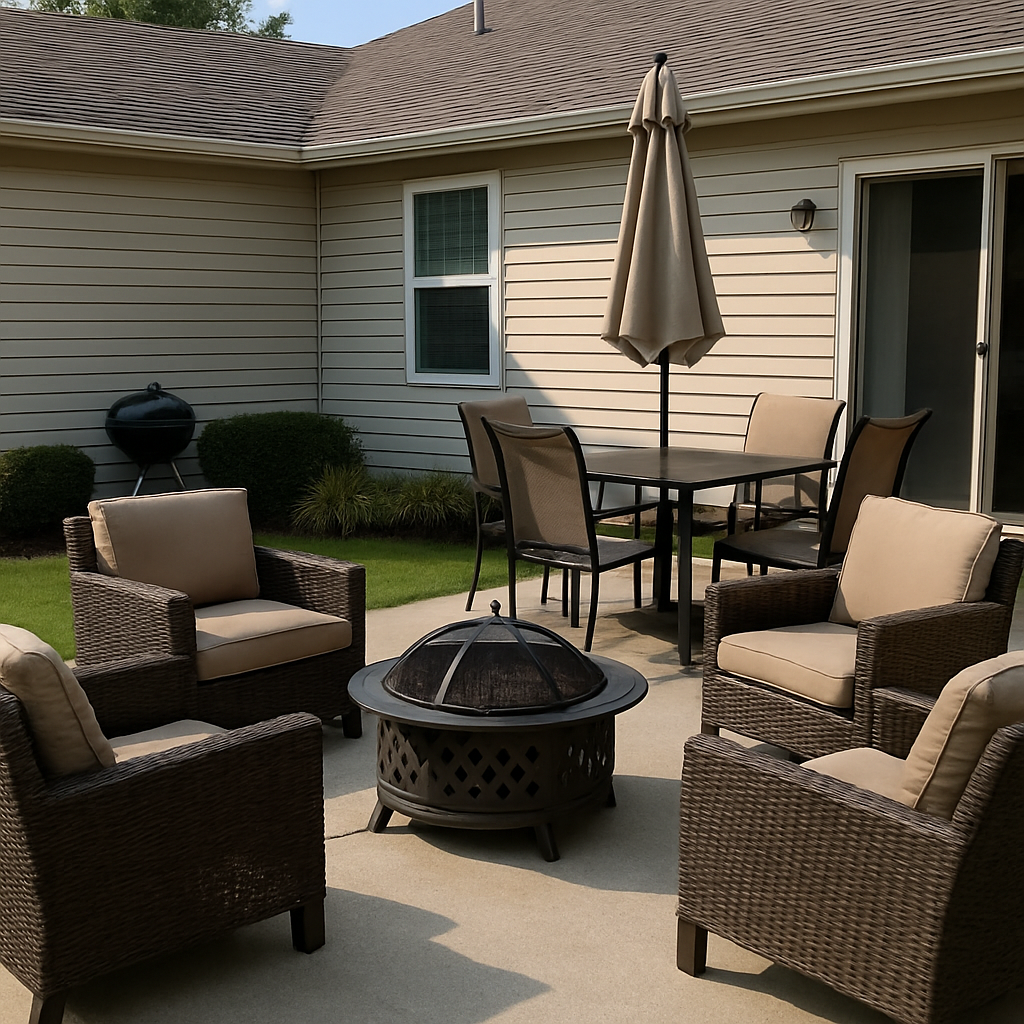
Guests naturally gather near food. Plan seating close enough for conversation but not so close that people block the cook, stand in smoke, or crowd hot surfaces. Bar seating, dining tables, lounge chairs, benches, and fire pit seating can all work depending on the layout.
Keep walkways clear between the house, grill, sink, refrigerator, dining area, and yard. Make sure appliance doors, cabinet doors, and grill lids can open without blocking traffic.
A good outdoor kitchen lets people gather comfortably while still giving the cook enough room to work.
Consider Heating and Cooling Features
Year-round outdoor living often requires climate support. In warm weather, ceiling fans, shade, misting systems, and natural airflow can help. In cooler months, patio heaters, fire pits, fireplaces, wind screens, and covered structures can make the space more comfortable.
Heating features should be chosen and installed carefully. Fire pits, fireplaces, and heaters require safe clearances, proper fuel planning, and fire-resistant materials. Always follow manufacturer instructions and local requirements.
Cooling features also need planning. Fans require electrical service and weather-rated fixtures. Misting systems need water access and may not be ideal for every climate or seating area.
Comfort features can extend how often the kitchen is used, but they should be integrated safely into the overall design.
Make Maintenance Easy
Outdoor kitchens get exposed to grease, food spills, pollen, leaves, insects, moisture, smoke, and weather. Easy maintenance should be part of the design.
Choose surfaces that are easy to wipe down. Avoid materials that stain easily near cooking areas unless you are comfortable with maintenance. Make sure grease trays, trash areas, and storage compartments are easy to access. Plan for covers where appropriate.
Appliances should be cleaned and maintained according to manufacturer instructions. Countertops, cabinets, flooring, and fixtures should be checked seasonally for wear, rust, loose components, or weather damage.
A year-round outdoor kitchen should be designed to last, but it will still need regular care.
Check Permits and Local Requirements
Outdoor kitchens may require permits depending on the scope. Gas lines, electrical work, plumbing, structures, roofs, decks, patios, and major hardscaping can all involve local requirements.
The International Code Council provides building safety resources that help explain why code-compliant construction matters. Homeowners should check with local building departments and work with qualified professionals when utilities, structures, or fire features are involved.
If you have a homeowners association, review its guidelines before starting. Rules may affect outdoor structures, finishes, setbacks, lighting, noise, and visible equipment.
Final Thoughts
Planning an outdoor kitchen that works year-round requires more than choosing a grill. Homeowners should think about location, weather protection, shade, materials, appliances, utilities, storage, lighting, seating, comfort features, maintenance, safety, and local requirements.
The best outdoor kitchens are designed around real use. They make cooking easier, entertaining more enjoyable, and outdoor living more practical through multiple seasons.
Whether you want a simple grill station or a fully equipped backyard kitchen, careful planning can help the space feel like a natural extension of your home. With the right layout and durable features, an outdoor kitchen can become one of the most useful and enjoyable areas on your property.