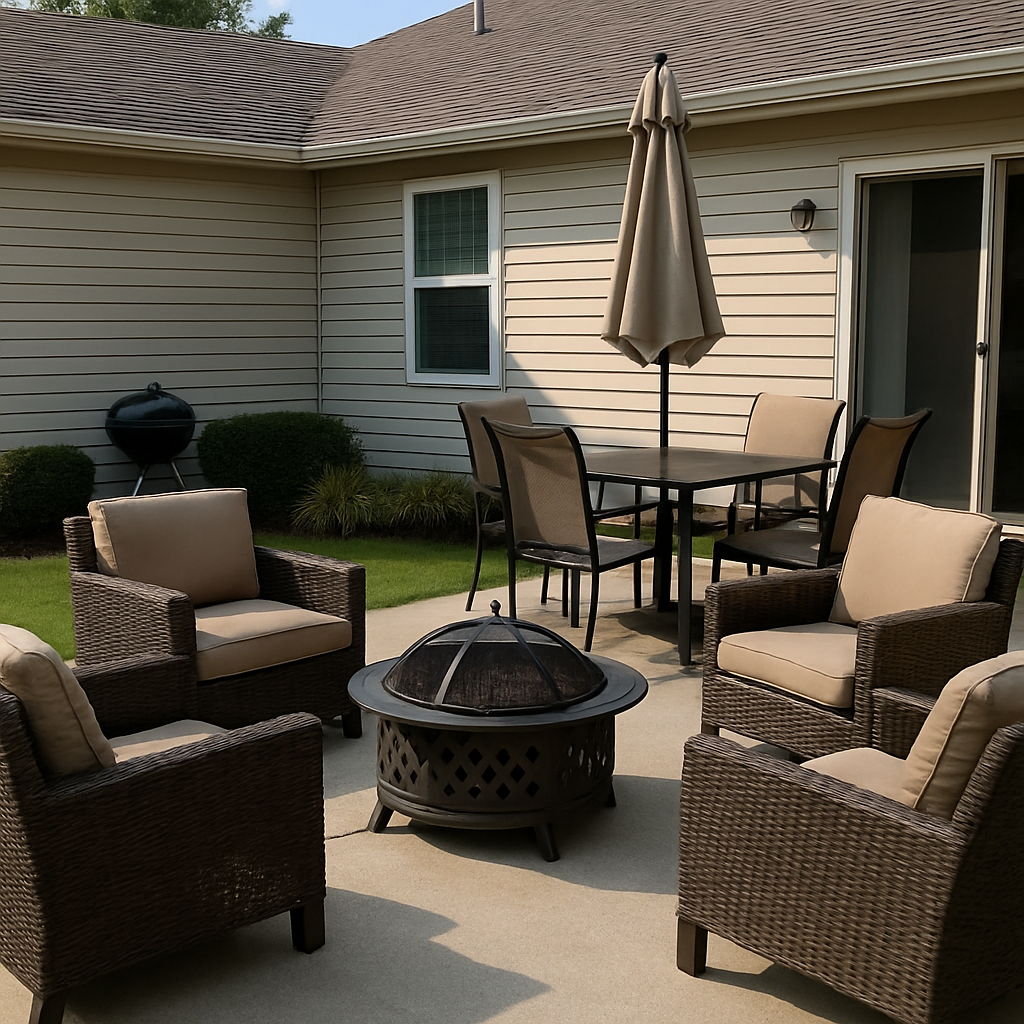
An outdoor fireplace or fire pit can make a backyard feel more inviting, especially in the evenings. It can create a natural gathering place, extend patio use into cooler months, and add a focal point to an outdoor living space. But before choosing a design, homeowners need to think beyond appearance.
Fire features involve heat, open flames, smoke, fuel, clearances, drainage, seating layout, surface materials, local rules, and long-term maintenance. A fire pit that looks great in a photo may not be safe or practical for your specific yard. An outdoor fireplace that feels like a simple upgrade may require permits, proper construction, chimney planning, and careful placement.
Before adding an outdoor fireplace or fire pit, homeowners should understand the difference between the two, where the feature can safely go, what fuel type makes sense, and what safety considerations should guide the project.
Start With the Type of Fire Feature You Want
The first decision is whether you want a fire pit, outdoor fireplace, fire bowl, chiminea, built-in gas feature, portable propane unit, or wood-burning structure. Each option changes the design, cost, safety needs, fuel storage, smoke behavior, and maintenance.
A fire pit is usually lower and more open, with seating arranged around it. It works well for casual gatherings, but smoke can move in different directions depending on the wind. An outdoor fireplace is usually taller and more structured. It creates a stronger focal point and may help direct smoke upward, but it often requires more planning, space, and construction.
Portable units may be easier to install but still need safe placement, manufacturer-approved clearances, and supervision. Built-in fire features may require permits, gas lines, masonry work, drainage planning, and professional installation.
Check Local Rules Before You Build
Outdoor fire rules vary by city, county, neighborhood, and homeowners association. Some areas limit wood-burning fire pits. Others require setbacks from structures, permits for gas lines, restrictions during burn bans, or rules about smoke, nuisance complaints, and fire size.
The International Fire Code includes requirements for recreational fires, bonfires, and portable outdoor fireplaces. For example, the 2024 IFC states that portable outdoor fireplaces should be used according to the manufacturer’s instructions and should not be operated within 15 feet of a structure or combustible material, with some exceptions for one- and two-family dwellings. It also includes larger clearance requirements for bonfires. Local jurisdictions may adopt, modify, or enforce codes differently, so homeowners should always check local rules before building or using a fire feature.
If you live in an HOA community, review those rules too. An HOA may have stricter requirements than the local fire code.
Clearance Is One of the Most Important Safety Factors
A fire feature needs enough space around it. Clearance is the distance between the flame and anything that can burn, including the house, deck, fence, pergola, trees, shrubs, furniture, cushions, siding, roof overhangs, screens, and stored items.
The National Fire Protection Association’s educational fire-safety messages recommend using chimineas, patio torches, personal fireplaces, and similar products outdoors only and at least 10 feet away from the home or anything that can burn. Manufacturer instructions and local rules may require more space depending on the product and setting.
Clearance should be planned before the patio layout is finalized. A fire pit placed too close to seating, siding, or overhead branches can become a safety problem even if it looks good in the design.
Think About Overhead Hazards
Many homeowners focus on the ground around the fire feature but forget to look up. Overhead hazards can include tree branches, pergolas, patio covers, umbrellas, string lights, roof overhangs, awnings, and second-story decks.
Open flames and rising heat need vertical clearance. A wood-burning fire pit should not sit under low branches or combustible coverings. Even gas features can produce heat that affects materials above them.
If you want a covered outdoor living space, talk to a qualified professional about whether a fire feature is appropriate under that structure. Some products are designed for certain covered applications, but many are not. The manufacturer’s installation instructions should be followed closely.
Choose the Right Surface Under the Fire Feature
The surface beneath a fire feature matters. Concrete, stone, brick, gravel, pavers, and other noncombustible materials are usually better choices than grass, mulch, wood decking, or synthetic surfaces. Heat, sparks, embers, and fuel spills can damage surfaces or create fire risk.
Portable fire pits are especially easy to place incorrectly. A homeowner may set one on a wood deck, near outdoor rugs, or on a patio surface not designed for heat. Before using any portable unit, check the manufacturer’s instructions for required base materials, clearance, and heat protection.
For permanent installations, the base may need proper excavation, compacted material, drainage, and fire-rated construction materials. A decorative stone ring alone is not always enough.
Wood-Burning Fire Pits Create Smoke
Wood-burning fire pits are popular because they feel traditional, smell familiar, and create a real campfire atmosphere. But smoke is part of the experience, and it should be considered before installation.
Smoke can irritate neighbors, drift into windows, stain nearby surfaces, and affect people with asthma, COPD, heart or lung disease, or other sensitivities. EPA notes that backyard recreational fires can be a source of fine-particle air pollution and that children, older adults, and people with heart or lung disease may be particularly sensitive to particle pollution in wood smoke.
If homes are close together or outdoor spaces are compact, a wood-burning fire pit may not be the best choice. A gas fire feature may reduce smoke, though it still requires safe installation and ventilation.
Burn the Right Wood
If you choose a wood-burning fire feature, the type and condition of the wood matter. Wet, green, treated, painted, or trash-contaminated wood can create excessive smoke, unpleasant odors, and unsafe emissions.
EPA’s wood-burning guidance recommends burning dry, seasoned wood and notes that lower-moisture wood burns more efficiently. EPA also recommends buying and burning locally cut firewood to reduce the risk of moving invasive pests.
Homeowners should avoid burning construction scraps, pressure-treated lumber, painted wood, cardboard, leaves, trash, plastics, or furniture. A backyard fire feature should be used for appropriate fuel only.
Gas Fire Features Need Professional Planning
Gas fire pits and fireplaces can be convenient because they are easier to light, produce less smoke than wood, and may be easier to turn off. But they are not automatically simple.
A built-in gas feature may require a gas line, shutoff valve, proper ventilation, manufacturer-approved components, permits, and professional installation. The gas supply must be sized correctly for the appliance. The feature also needs adequate drainage so water does not collect where it can affect burners, ignition parts, or gas components.
Portable propane fire pits also require careful placement and fuel storage. Propane cylinders should be used and stored according to product instructions and local safety guidance.
Never Use Outdoor Fire Features Indoors
Outdoor fire pits, fireplaces, grills, and heaters should not be used inside the home, garage, enclosed porch, tent, or any space that is not designed and ventilated for that use. Carbon monoxide can build up quickly and become deadly.
The Consumer Product Safety Commission warns that using outdoor heaters, grills, or generators indoors can cause deadly carbon monoxide buildup in minutes. This