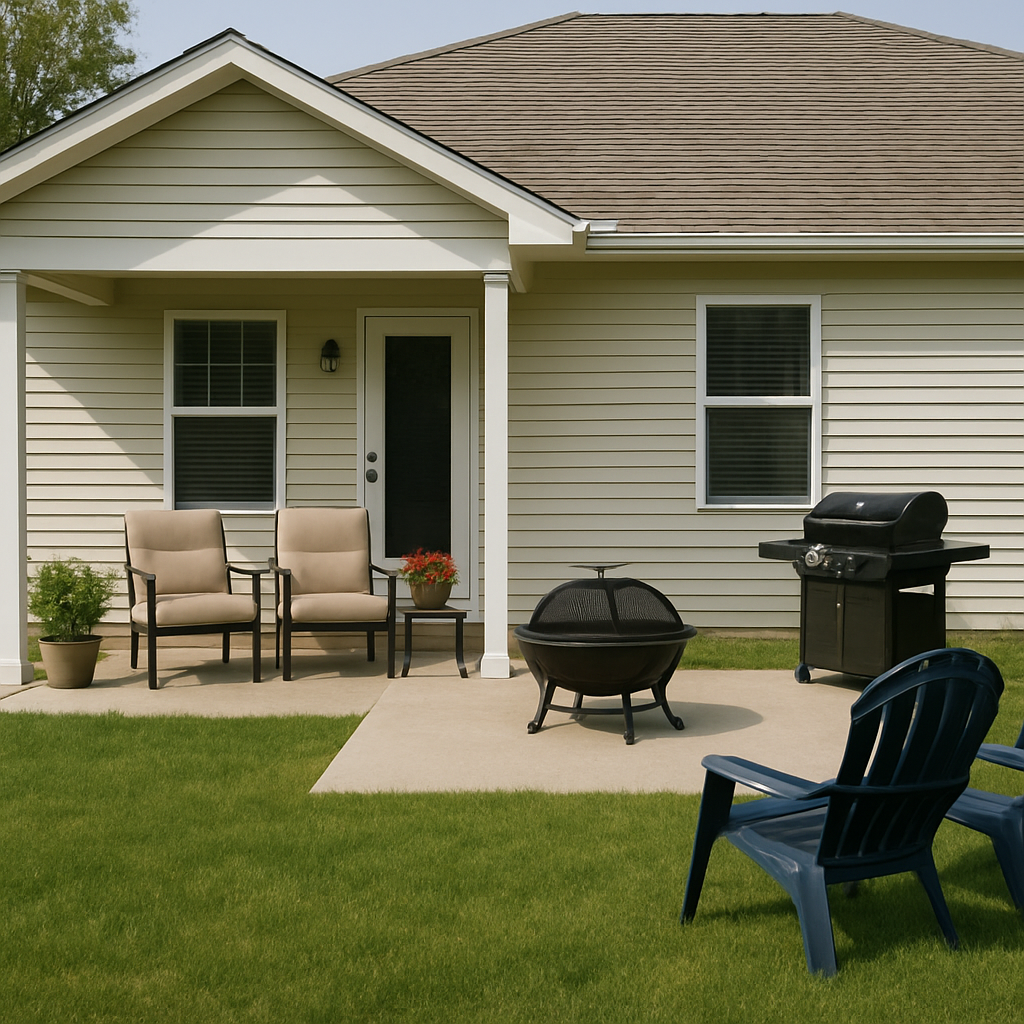
Outdoor living spaces have become much more than a backyard trend. For many homeowners, a well-designed patio, deck, porch, outdoor kitchen, fire pit area, or covered seating space can make the home feel larger, more comfortable, and more useful. Instead of treating the yard as separate from the house, outdoor living design turns exterior space into an extension of daily life.
A functional outdoor area can support dining, entertaining, relaxing, cooking, gardening, working from home, exercising, watching children play, and enjoying time with family. It can also improve curb appeal, make better use of underused yard space, and help homeowners enjoy their property more throughout the year.
The National Association of Realtors’ Remodeling Impact Report: Outdoor Features highlights how outdoor projects can improve homeowner enjoyment and perceived value. While every property is different, many homeowners find that outdoor upgrades make their homes feel more livable, not just more attractive.
If you are thinking about improving your yard, here are the main ways outdoor living spaces add function to your home.
They Create More Usable Living Space
One of the biggest benefits of an outdoor living area is that it gives your household more room to spread out. A patio with comfortable seating can become a second living room. A covered porch can become a quiet place for morning coffee. A deck can become a dining area. A fire pit can create a gathering spot in the evening.
This added space is especially valuable for homes with smaller interiors. Instead of feeling limited by square footage inside the house, homeowners can use the yard to create another place to relax, host, or spend time together.
Outdoor living spaces work best when they are designed for real use. A few chairs randomly placed in the yard may not feel inviting. But a planned area with seating, shade, lighting, and easy access from the house can become part of the home’s daily routine.
They Make Entertaining Easier
A functional outdoor living space can completely change how a home handles guests. Instead of crowding everyone into the kitchen or living room, homeowners can move gatherings outside. This creates more space for seating, conversation, food, games, and movement.
Outdoor entertaining areas can be simple or elaborate. A small patio with a dining table may be enough for casual meals. A larger backyard may include an outdoor kitchen, grill station, bar seating, pergola, fire feature, and multiple conversation zones.
The key is flow. Guests should be able to move easily between the indoor kitchen, outdoor dining area, seating space, and yard. If food and drinks are part of the gathering, think about where people will set plates, dispose of trash, and refill drinks.
A good outdoor setup makes hosting feel less stressful because the space supports the way people naturally gather.
They Improve Everyday Dining
Outdoor dining is not just for parties. A patio, deck, or screened porch can make ordinary meals feel more enjoyable. Families may use the space for weekend breakfasts, weeknight dinners, grilling, or casual lunches.
Adding a dining function to an outdoor area does not require a large yard. Even a small patio can hold a compact table, bench seating, or bistro set. The important details are surface stability, shade, lighting, and proximity to the kitchen.
If the dining area is too far from the house, homeowners may not use it often. If it is easy to carry food outside and return dishes indoors, the space becomes much more practical.
Outdoor dining areas can also reduce heat inside the kitchen during warm months when grilling or eating outside feels more comfortable.
They Support Outdoor Cooking
Outdoor kitchens and grill stations are some of the most functional backyard upgrades. Even a simple built-in grill area can improve how the outdoor space is used. Homeowners who cook outside regularly may benefit from counter space, storage, a sink, lighting, weather-resistant cabinets, or a small refrigerator.
An outdoor cooking area keeps the cook connected to guests instead of isolated inside the kitchen. It also makes summer meals, family cookouts, and casual entertaining easier.
When planning an outdoor cooking space, think about safety and placement. Grills should be located away from combustible materials and positioned where smoke will not blow directly into doors, windows, or seating areas. Local building codes, manufacturer instructions, and professional installation guidance should always be followed.
For more detailed safety information, the National Fire Protection Association offers helpful grilling safety tips for homeowners.
They Help Define Activity Zones
A backyard is more useful when it has clear zones. Instead of one open area with no specific purpose, outdoor living design can create dedicated spaces for dining, lounging, cooking, gardening, playing, or relaxing by a fire.
Zoning does not require walls. It can be created with furniture placement, pavers, decking, planters, lighting, rugs, pergolas, privacy screens, pathways, or changes in elevation. For example, a patio near the house may serve as a dining area, while a fire pit farther into the yard creates a separate evening lounge.
Defined zones help the yard feel organized. They also make it easier for multiple people to use the outdoor space at once. Children can play on the lawn while adults sit nearby. Someone can grill while guests gather around a table. A quiet seating area can stay separate from the main entertaining space.
Better Homes & Gardens often emphasizes functional zones in outdoor design, including ideas for creating small backyard retreats with dining, lounging, cooking, and garden areas. Thoughtful zoning can make even a modest yard feel more useful and intentional.
They Make the Home Feel More Connected to Nature
Outdoor living spaces help homeowners spend more time outside without leaving home. This can make daily routines feel more relaxing and connected to the natural environment.
A comfortable outdoor area can become a place to read, drink coffee, stretch, work on a laptop, watch birds, garden, or decompress after a long day. Landscaping, shade trees, container plants, water features, and natural materials can make the space feel calmer and more inviting.
The EPA notes that trees and vegetation can help reduce heat islands by providing shade and cooling effects. On an individual property, thoughtful planting can also make outdoor areas more comfortable, especially during hot months.
A functional outdoor space should not only look good in photos. It should feel pleasant enough that people actually want to use it.
They Can Improve Comfort With Shade and Weather Protection
One reason many outdoor spaces go unused is that they are too hot, too exposed, too windy, or too wet. Adding shade and weather protection can make the area more functional for more months of the year.
Shade can come from trees, pergolas, covered porches, awnings, shade sails, umbrellas, or roof extensions. Weather protection can include covered patios, screened porches, wind screens, outdoor curtains, or partially enclosed areas.
These features help homeowners use the space during sunny afternoons, light rain, or cooler evenings. They can also protect furniture and finishes from constant exposure.
For decks and elevated outdoor spaces, safety and code compliance matter. The International Code Council provides building safety resources and model code information, and its work with deck safety publications highlights the importance of proper structural design. Homeowners can start with the ICC’s building safety resources when thinking about safe construction.
They Add Practical Storage
Outdoor living spaces are more functional when storage is included. Without storage, cushions, gardening tools, grilling supplies, toys, pool items, firewood, and outdoor accessories can create clutter.
Storage can be built into benches, outdoor cabinets, deck boxes, sheds, under-deck areas, or screened porch furniture. A small storage plan can make the outdoor area easier to maintain and more pleasant to use.
For example, a grill station with cabinets can hold tools and propane accessories. A bench with storage can hold cushions and blankets. A small shed can keep yard equipment out of the garage. Built-in storage helps keep the space clean and ready to use.
They Support Family Life
Outdoor living spaces can make home life easier for families. A backyard with seating, shade, and clear sightlines allows parents to supervise children while still having a comfortable place to sit. A patio can support crafts, snacks, games, homework, or casual family dinners.
For families with pets, outdoor living areas can also create more comfortable routines. A shaded patio, fenced yard, or covered porch can make it easier to spend time outside together.
The best family-friendly outdoor spaces are durable, easy to clean, and flexible. Materials should handle spills, weather, toys, and frequent movement. Furniture should be comfortable but not overly delicate. Lighting should make evening use safer.
They Can Improve Work-From-Home Flexibility
As more people use their homes for work, outdoor spaces can provide a welcome change of scenery. A shaded porch or patio can serve as an occasional outdoor office for calls, emails, planning, or creative work.
To make this practical, the area needs shade, comfortable seating, a stable surface, Wi-Fi access, and reduced glare. Privacy may also matter if you take calls or need quiet.
Outdoor workspaces do not need to replace a home office. They simply provide another option when the weather is pleasant and you want to step away from indoor routines.
They Help Extend Use Into the Evening
Lighting is one of the most important features for outdoor function. Without lighting, a patio or deck may only be useful during daylight. With the right lighting, it can become an evening dining area, lounge, or gathering space.
Outdoor lighting may include path lights, string lights, step lights, sconces, landscape lighting, deck lighting, or fixtures under a covered area. The goal is to make the space safer and more comfortable without creating harsh glare.
Lighting should be chosen for outdoor use and installed safely. Wet-rated and damp-rated fixtures should be selected based on location, and electrical work should follow local requirements.
They Can Increase Curb Appeal and Enjoyment
Outdoor living spaces can improve how a home looks from the outside. A well-designed front porch, welcoming walkway, landscaped patio, or clean deck can make the property feel more polished and cared for.
However, the biggest value is often personal enjoyment. A space that encourages homeowners to eat outside, relax after work, host friends, garden, or spend more time with family adds function beyond appearance.
The NAR outdoor features report focuses heavily on homeowner satisfaction and the enjoyment people experience after completing outdoor projects. That matters because a home should support the way people want to live, not just look good from the street.
Final Thoughts
Outdoor living spaces add function by creating more usable space, improving entertaining, supporting outdoor dining and cooking, defining activity zones, increasing comfort, adding storage, and helping homeowners spend more time outside.
The most successful outdoor spaces are designed around real routines. Before starting a project, think about how you want to use the space. Do you need a dining area, lounge, grill station, play zone, garden area, covered porch, or quiet retreat? Once the purpose is clear, it becomes easier to choose the right layout, materials, lighting, shade, and features.
Whether your home has a large backyard, small patio, deck, porch, or side yard, thoughtful outdoor living design can make the property more comfortable, practical, and enjoyable year-round.