A roof leak that only shows up during windy rain can be confusing. During a normal rainstorm, everything may seem fine. But when rain comes with strong gusts, water suddenly appears near a ceiling, wall, window, attic, fireplace, or exterior corner. Then the rain stops, the leak disappears, and it becomes harder to figure out where the water came from.
A roof may leak only during wind-driven rain because wind changes the direction of the water. Instead of falling straight down and draining normally, rain can be pushed sideways, upward, or under materials that usually shed water during calmer weather. That can expose weak points around flashing, roof edges, vents, shingles, siding transitions, windows, chimneys, valleys, soffits, and attic openings.
The leak may seem random, but it usually means there is a vulnerable entry point that only fails under certain weather conditions.
What Is Wind-Driven Rain?
Wind-driven rain is rain that is pushed by wind instead of falling mostly downward. During a storm, strong wind can force water against the sides of the home, under roof edges, around openings, and into gaps that would not leak during a gentle rain.
The Insurance Institute for Business & Home Safety studies how wind-driven rain enters buildings and notes that water can penetrate common openings in residential roof systems during these events. IBHS explains its wind-driven rain research here.
This matters because most roofs are designed to shed water by gravity. If rain falls straight down, shingles, flashing, gutters, and roof slopes direct it away. When wind pushes rain sideways or upward, water may reach areas that are not meant to handle direct water pressure.
Why the Roof Does Not Leak Every Time It Rains
A roof leak that only happens during wind-driven rain is often caused by a small weakness. During normal rain, water may flow past the weak spot without entering. During windy rain, water may be pushed into that gap from a different angle.
This is why these leaks are hard to diagnose. The roof may pass a visual check after a calm rain. The attic may stay dry during light showers. But when the wind comes from a certain direction, water may enter through a tiny opening.
The location of the leak may also depend on wind direction. A storm from the west may cause a leak that does not appear when rain comes from another direction.
Flashing Is a Common Weak Point
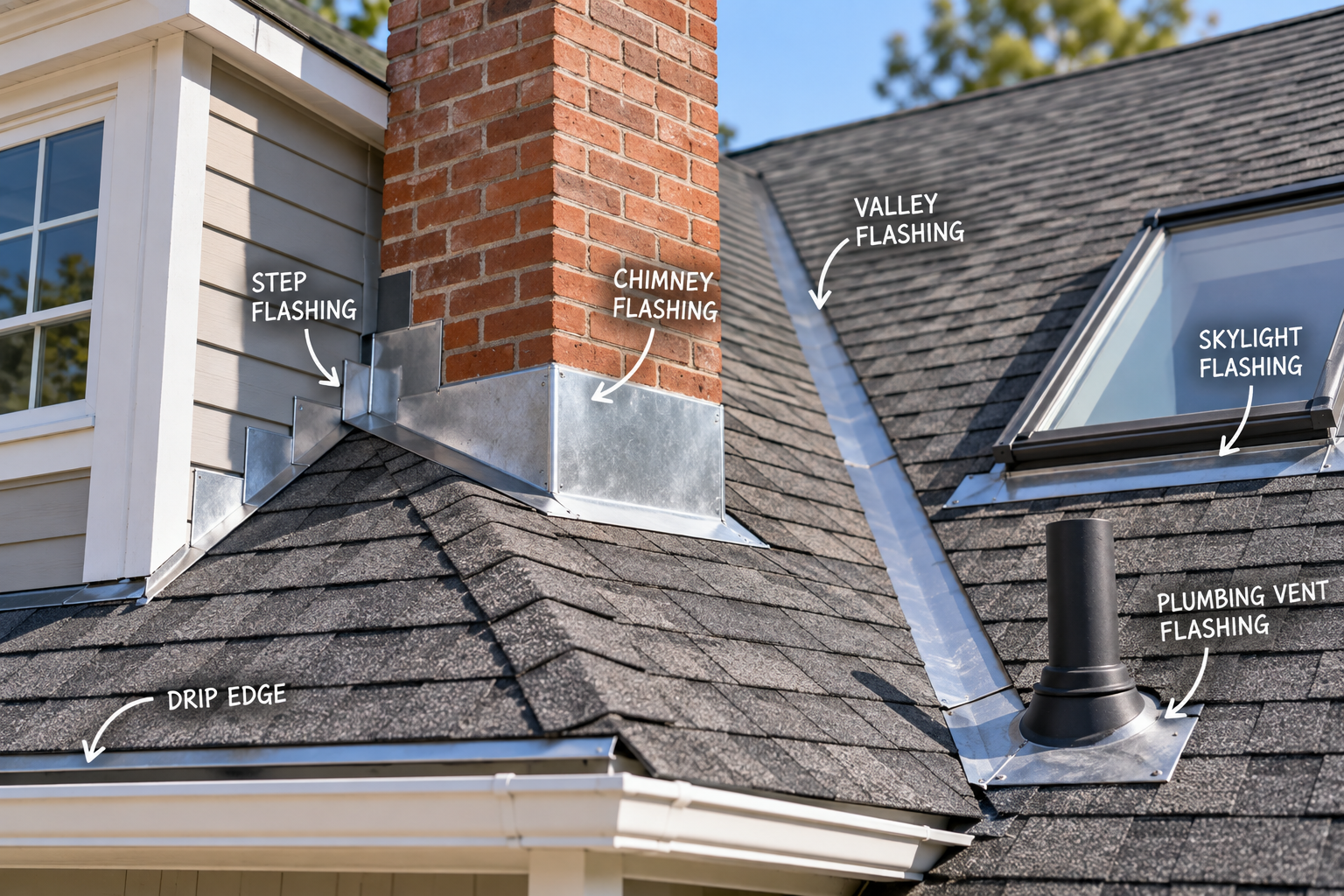
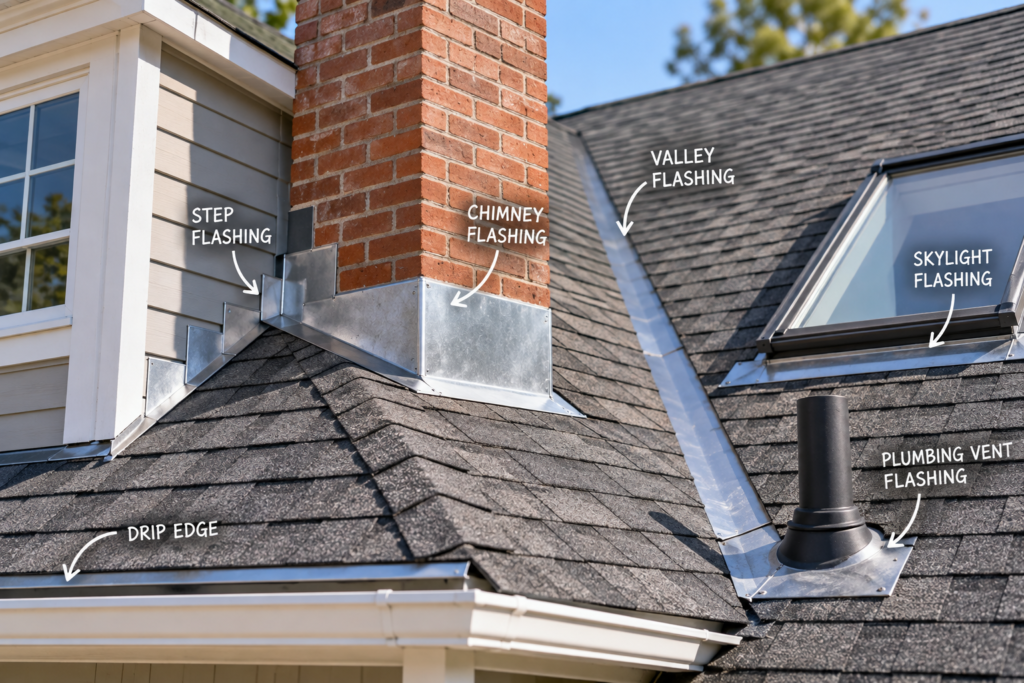
Flashing is one of the first areas to check when a roof leaks during wind-driven rain. Flashing protects transitions, edges, penetrations, and places where the roof meets another surface. This includes chimneys, walls, skylights, roof valleys, vent pipes, dormers, and roof-to-wall intersections.
IBHS notes that loose or ill-fitted flashing can contribute to roof cover failure and water intrusion during high-wind storms. IBHS/FORTIFIED roof maintenance guidance includes flashing among the roof components homeowners should check.
If flashing is loose, bent, rusted, cracked, poorly sealed, or installed incorrectly, wind-driven rain can push water behind it. The roof may not leak during vertical rain because gravity pulls water away. But angled rain can reach behind the flashing and enter the roof system.
Step Flashing Problems Near Walls
Step flashing is used where a roof meets a vertical wall. It is especially important around dormers, sidewalls, second-story walls, porch roofs, and rooflines that connect to siding.
When step flashing fails, water may enter behind siding or under shingles. During calm rain, water may drain down the roof normally. During wind-driven rain, water can be pushed sideways into the wall-roof joint.
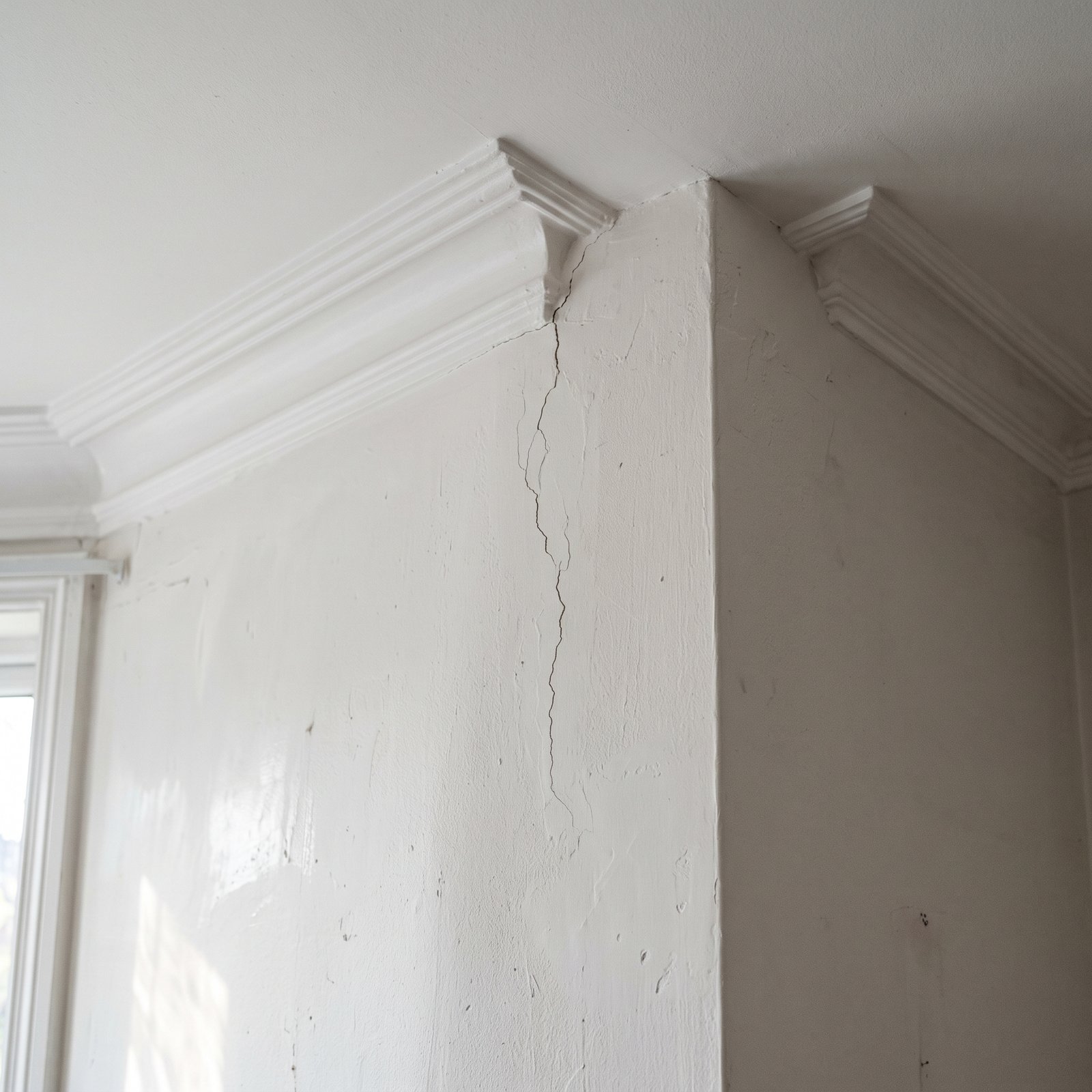
Warning signs may include stains along an interior wall, peeling paint near the ceiling line, damp insulation, musty smells, or leaks that appear only when the wind blows from one side of the house.
Chimney Flashing Can Leak During Windy Storms
Chimneys are another common leak point during wind-driven rain. A chimney interrupts the roof surface, which means the area around it needs proper flashing, counterflashing, and sealant details.
If the flashing is loose or cracked, if mortar joints are deteriorated, if the chimney cap is damaged, or if water is entering through masonry, wind can drive rain into openings that do not leak every time it rains.
Chimney leaks may appear on ceilings near the fireplace, along the chimney chase, in the attic, or on walls near the chimney. Because water can travel along framing, the visible stain may not be directly beside the actual entry point.
Roof Vents and Pipe Boots Can Leak Under Pressure
Plumbing vents, exhaust vents, roof vents, and pipe boots are all roof penetrations. Each one creates an opening that must be sealed correctly.
If a vent boot is cracked, if rubber has dried out, if sealant has failed, or if the flashing around the vent is loose, wind-driven rain can force water under the edge. This type of leak may only appear when rain hits the roof from a certain angle.
FEMA’s coastal construction guidance notes the importance of minimizing water intrusion through roof vents in high-wind regions and discusses how roof vents can be vulnerable to wind-driven rain. FEMA’s Home Builder’s Guide to Coastal Construction includes roof vent water-intrusion guidance.
Even homes outside coastal zones can experience the same basic problem: wind changes where rain goes and how hard it presses against roof openings.
Shingles May Lift During Wind
Wind can lift loose, cracked, curled, or poorly sealed shingles. When shingles lift, rain can be pushed underneath them. During a gentle rain, those same shingles may still shed water well enough that no leak appears.
This is why wind-driven leaks often show up after shingles have started aging, curling, losing granules, or separating at the edges. Wind does not always remove shingles completely. Sometimes it only lifts them enough for water to enter.
IBHS notes that wind can exploit vulnerabilities in roof covers and that once roof-cover damage begins, water entry can follow. IBHS roof aging and hazard research explains the connection between everyday roof wear, wind vulnerability, and rain entry.
If a roof is older or has visible shingle damage, wind-driven rain may reveal problems before a calm rain does.
Roof Edges Can Let Water In
Roof edges are vulnerable during windy storms because water can be pushed upward under overhangs, drip edges, fascia areas, and soffits. If the edge details are loose, damaged, or poorly sealed, wind-driven rain may enter the attic or roof structure.
IBHS testing has shown that when wind drives rain almost sideways, water can be blown up under roof overhangs, and weak soffits can allow water into the home. FORTIFIED Roof guidance explains why reinforced soffits and roof-edge details matter during high-wind rain events.
A roof-edge leak may show up as attic moisture, stains near exterior walls, damp insulation near the eaves, or water marks along the ceiling close to the outside wall.
Soffits Can Be a Hidden Entry Point
Soffits are the underside of the roof overhang. They often include vents that help attic airflow. While soffit ventilation can be important, soffits can also become an entry point if they are loose, damaged, poorly supported, or exposed to wind-driven rain.
During normal rain, soffits may stay dry. During windy rain, water can be pushed up and into the underside of the overhang. Once water enters the soffit area, it may reach attic insulation, framing, or wall cavities.
This is one reason homeowners should not assume every ceiling stain is caused by a hole in the roof surface. The water may have entered from the edge or underside of the roof assembly.
Siding and Roof Intersections Can Leak
Sometimes a leak that looks like a roof leak is actually coming through the wall system. Wind-driven rain can hit siding, trim, windows, doors, and wall penetrations with enough force to find gaps.
If siding meets a roofline, water may enter where flashing, housewrap, trim, or sealant is incomplete. If a window or wall penetration sits above the leak area, water may travel down behind finishes and appear near the ceiling.
FEMA’s wind vulnerability guidance discusses the building envelope and exterior equipment and highlights the importance of details such as flashings in reducing water entry. FEMA’s wind vulnerability guidance is technical, but the homeowner takeaway is that the full exterior envelope matters, not just the roof covering.
If the leak appears during windy rain but not regular rain, the wall-roof connection should be checked along with the roof surface.
Windows Near Rooflines Can Be Involved
A leak near the ceiling may be caused by a window above the leak area, especially during wind-driven rain. Water can be forced around window trim, behind siding, or through gaps in flashing. It may then run down inside the wall and appear where the wall meets the ceiling.
This can be especially confusing in multi-story homes. A second-floor window leak may show up as a first-floor ceiling stain. A dormer window leak may appear as attic moisture or staining on a lower ceiling.
If a roof inspection does not find an obvious roof source, nearby windows and siding should be included in the evaluation.
Roof Valleys Can Back Up During Heavy Wind and Rain
Roof valleys are channels where two roof slopes meet. They carry a large amount of water during storms. If a valley has debris, damaged shingles, worn flashing, or poor installation, wind-driven rain may make the problem worse.
Wind can push water sideways within the valley, lift debris, or force water under valley edges. If the valley already has weak underlayment or flashing, the leak may only appear during intense storms.
Valley leaks can be difficult to spot because the entry point may be higher on the roof than the interior stain suggests.
Gutters Can Make Wind-Driven Rain Problems Worse
Gutters are supposed to move water away from the roof edge. If they are clogged, sagging, loose, or overflowing, they may allow water to back up near the edge of the roof.
During wind-driven rain, overflowing gutters can splash water against fascia, soffits, siding, and roof edges. This can increase the chance that water enters through small gaps.
A leak near an exterior wall during windy rain may be connected to both roof-edge vulnerability and gutter drainage problems.
Sealants Can Fail Before You Notice a Leak
Sealants around vents, flashing, skylights, roof edges, and previous repairs can dry out, crack, shrink, or pull away over time. During normal rain, a small sealant crack may not leak. During wind-driven rain, water may be pushed into that opening.
This is common with older repairs that relied heavily on caulk or roof cement. Sealant can be useful when used correctly, but it is not a permanent substitute for proper flashing or drainage.
If a leak appears only during certain storms, old sealant lines should be inspected carefully.
Attic Clues Can Help Find the Source
The attic can provide important clues after a wind-driven rain leak. Homeowners may notice damp insulation, stained roof decking, water trails, rusted nails, musty odors, or daylight near roof penetrations.
The tricky part is that water can travel before it becomes visible. The stain inside the home may not line up perfectly with the roof opening. Water may run along rafters, sheathing, insulation, or wall framing before dripping.
If it is safe to do so, homeowners can look for attic clues after a storm. However, walking on attic framing can be dangerous, and insulation can hide hazards. A professional inspection is usually safer and more thorough.
Interior Stains Should Not Be Ignored
Even if the leak only happens once, the water source should be addressed. A small leak can damage insulation, drywall, paint, framing, and finishes. Repeated moisture can also create conditions for mold growth.
EPA states that mold will not grow without water or moisture and recommends fixing the source of the water problem or leak to prevent mold growth. EPA’s mold and moisture guide explains why moisture control is the key step.
If wet materials are dried quickly, damage may be limited. But if the leak returns with every windy storm, repairs should not be delayed.
Why the Leak May Be Hard to Recreate
Wind-driven rain leaks can be difficult to recreate with a hose. A hose test may not match the storm’s wind speed, rain angle, pressure, direction, duration, or water volume.
A roof may not leak during a simple water test because the water is not being pushed into the same opening from the same angle. This can make diagnosis frustrating.
A contractor may need to inspect the roof, attic, flashing, siding, soffits, windows, and drainage areas rather than relying only on where water appears indoors.
What to Document After a Wind-Driven Rain Leak
Documentation can help you and your contractor understand the pattern. After the leak appears, write down:
The date and time of the storm
The direction the wind seemed to be coming from
Where the water appeared inside
Whether the leak stopped when the wind changed
Whether the stain is near an exterior wall, chimney, vent, or window
Photos of the stain or drip
Photos of exterior damage if safely visible from the ground
Whether gutters were overflowing
Whether the attic had damp insulation or visible water trails
This information can help narrow the inspection area.
Do Not Patch Only the Interior
A common mistake is repairing the drywall or repainting the ceiling before the exterior leak source is found. That can make the room look better temporarily, but it does not prevent the next storm from bringing water back.
Interior repairs should usually wait until the roof, flashing, siding, window, or drainage issue has been corrected. Otherwise, the same stain may return.
If moisture has affected insulation or drywall, those materials may also need to be dried or replaced depending on the extent of the damage.
When to Call a Professional
Homeowners should call a professional if a leak appears during wind-driven rain, especially if it returns, spreads, causes staining, affects the attic, appears near electrical fixtures, or is connected to visible roof damage.
A professional may inspect:
Roof shingles or tiles
Roof flashing
Vent boots and roof penetrations
Chimneys and skylights
Roof valleys
Drip edges and fascia
Soffits and roof overhangs
Gutters and downspouts
Siding near rooflines
Windows above the leak area
Attic decking and insulation
Because wind-driven rain can enter through several types of openings, the inspection should look beyond the most obvious roof surface.
Can This Type of Leak Be Repaired?
Yes, many wind-driven rain leaks can be repaired once the source is identified. The repair may involve replacing damaged shingles, repairing flashing, resealing or replacing vent boots, correcting roof-edge details, repairing soffits, clearing gutters, fixing siding transitions, or addressing window flashing.
However, if the roof has widespread wear, repeated leaks, major storm damage, or aging materials, a larger roofing or exterior repair may be needed.
The right solution depends on the actual entry point. A leak caused by lifted shingles needs a different repair than one caused by chimney flashing, soffit failure, or window flashing.
Final Thoughts
A roof that leaks only during wind-driven rain usually has a weak point that normal rain does not expose. Wind can push water sideways, upward, under shingles, behind flashing, into soffits, around vents, through siding transitions, or near windows. That is why the leak may appear during one storm and not another.
Homeowners should not ignore these leaks just because they are intermittent. Repeated wind-driven rain can damage insulation, drywall, attic materials, and framing over time. The best next step is to document the pattern, check for visible warning signs, and have the roof and exterior envelope inspected.
A wind-driven rain leak is not random. It is a sign that water is finding a path into the home under the right conditions. The sooner that path is found and corrected, the easier it is to prevent the damage from spreading.