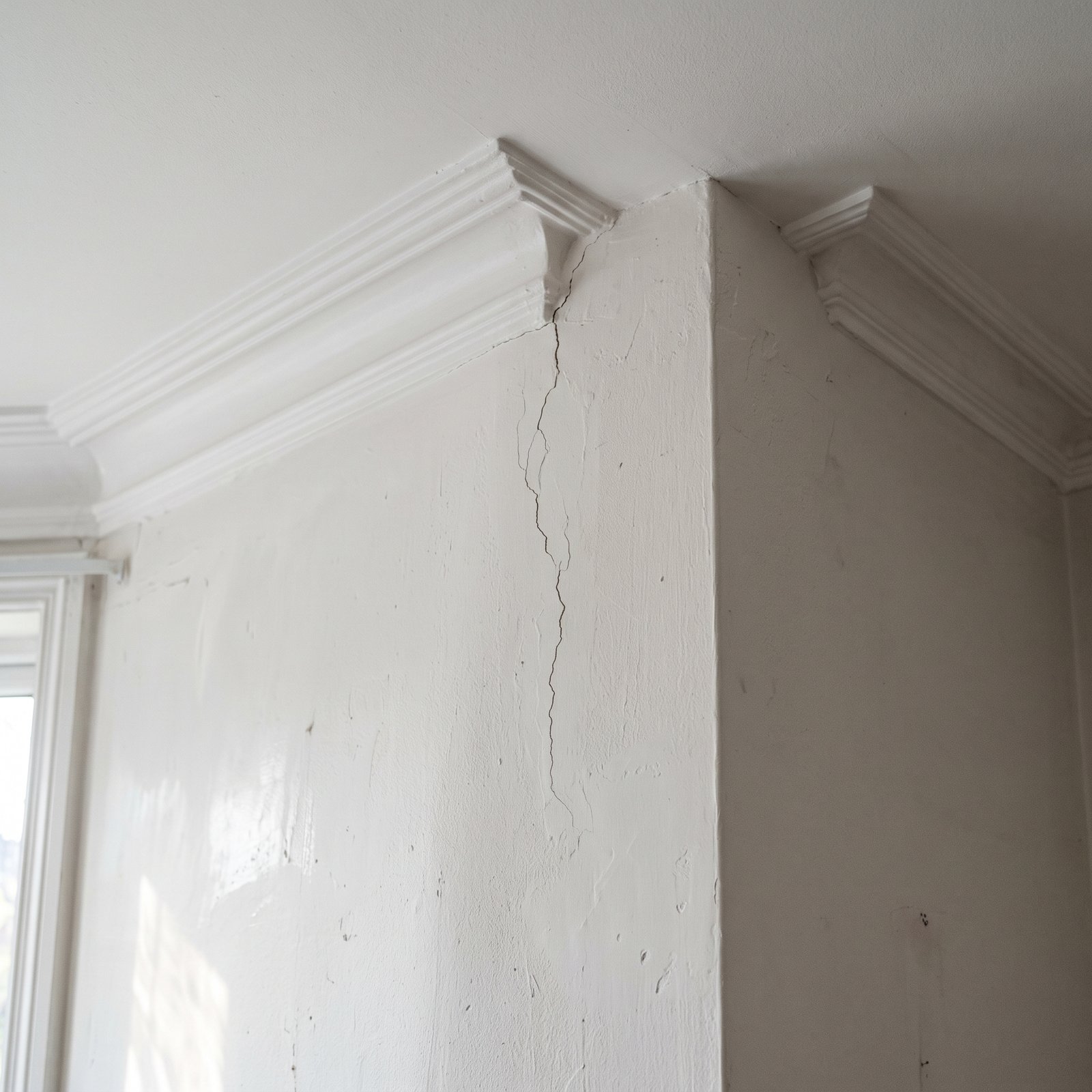
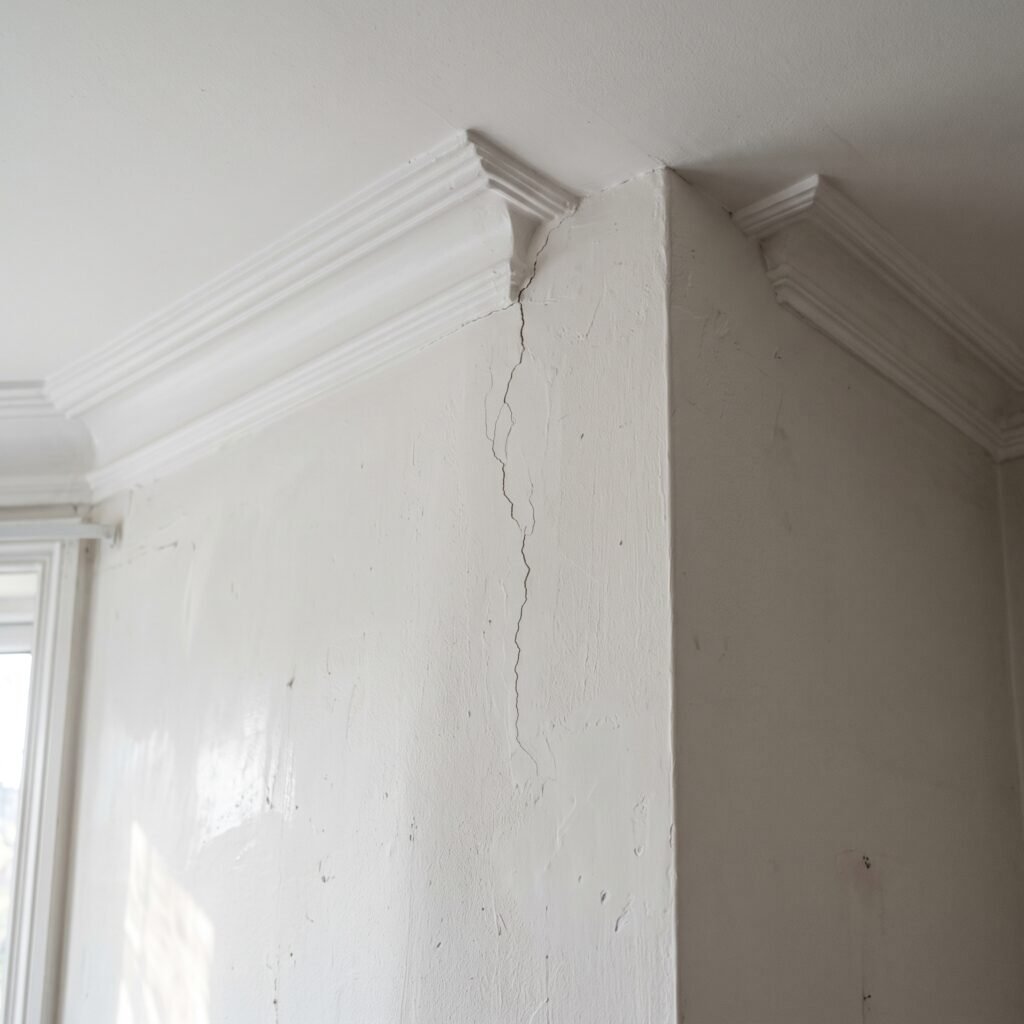
A crack where the wall meets the ceiling can be easy to overlook at first. It may look like a thin line in the paint, a small separation in the corner, or a repeating crack along the top of a wall. Sometimes it stays the same for years. Other times, it widens, returns after patching, or appears alongside stains, sagging, sticking doors, or other warning signs.
So, what causes cracks where walls meet the ceiling?
Common causes include normal house settling, seasonal humidity changes, drywall tape failure, truss uplift, poor drywall installation, temperature changes, foundation movement, roof or plumbing leaks, attic moisture, and structural movement. Some cracks are cosmetic. Others may point to moisture or structural issues that should be evaluated before repairs are made.
The key is to look at the crack’s size, location, pattern, timing, and whether it comes with other symptoms.
Start With the Type of Crack
Not every wall-to-ceiling crack means the same thing. A thin, straight crack along a drywall seam may be related to joint tape or seasonal movement. A crack that opens and closes at certain times of year may be related to temperature and humidity changes. A crack with staining may point to a leak. A crack paired with sagging, sloping floors, or sticking doors may need closer structural review.
Before patching, homeowners should ask:
Is the crack new or old?
Is it getting wider?
Does it return after repair?
Is it straight or jagged?
Is there staining or softness nearby?
Does the ceiling look saggy?
Are doors or windows sticking?
Are there cracks in multiple rooms?
Does the crack change with the seasons?
The answers can help determine whether the issue is cosmetic or whether a professional should inspect the home.
Normal Settling Can Create Small Cracks
Homes naturally move over time. Framing materials dry, expand, shrink, and adjust. Soil beneath the home may settle slightly. Temperature and humidity changes can also cause small amounts of movement.
Because drywall is rigid, small movements may show up as cracks where two surfaces meet. The wall-to-ceiling joint is a common place for this because it is where different planes of drywall come together.
Small hairline cracks that remain stable may be cosmetic. They may be repaired with proper drywall tape, joint compound, sanding, and paint. However, cracks that widen, spread, or appear alongside other signs of movement should be taken more seriously.
Drywall Tape Can Fail at the Joint
Many cracks where walls meet ceilings are caused by drywall tape failure. Drywall tape is used to bridge the joint between drywall panels. If the tape was poorly embedded, the joint compound dried too quickly, the surface moved, or moisture weakened the material, the tape may loosen.
This can create a straight crack or separation at the ceiling line. Sometimes the tape bubbles, peels, or pulls away from the corner. In these cases, simply painting over the crack usually does not work. The loose tape may need to be removed or reworked before the joint is refinished.
If the crack comes back repeatedly in the same line, the repair may need more than surface caulk.
Seasonal Humidity Changes Can Move Materials
Wood framing and drywall materials can respond to seasonal humidity changes. When indoor air becomes very dry, materials may shrink slightly. When humidity rises, materials may expand. These movements can create small cracks at joints and corners.
The EPA recommends keeping indoor humidity below 60 percent and ideally between 30 and 50 percent to help control moisture and reduce mold risk. EPA also notes that moisture control is key to mold control. EPA’s mold and moisture guidance explains why indoor moisture levels matter for building materials and indoor air quality.
Humidity-related cracks may be more noticeable during certain seasons. They may open in dry months and become less visible when humidity rises. If the crack is minor and stable, it may be mostly cosmetic. If humidity is high enough to cause condensation, staining, musty odors, or mold, moisture control should be addressed before repairs.
Truss Uplift Can Cause Ceiling-Line Cracks
Truss uplift is one common reason cracks appear where interior walls meet ceilings, especially on the top floor of a home. It can happen when roof trusses move slightly because different parts of the truss experience different temperature and moisture conditions.
The result can be a gap or crack along the wall-to-ceiling joint. It may be more visible during certain seasons and may return even after cosmetic repair.
The important point is that truss uplift is different from a simple drywall crack. If the drywall is fastened in a way that does not allow for movement, the joint may crack repeatedly. Patching the crack without addressing the movement may only provide a temporary fix.
A contractor, home inspector, or structural professional can help determine whether a recurring top-floor ceiling-line crack may be related to truss movement or something else.
Poor Drywall Installation Can Show Up Later
Sometimes cracks appear because the drywall was not installed or finished properly. Common issues include poor taping, insufficient joint compound, missing backing, improper fastening, weak corners, or panels installed too tightly without allowing for movement.
These flaws may not show up right away. Over time, normal movement, humidity changes, or vibration can cause the weak joint to crack.
If several cracks follow drywall seams or corners, the issue may be related to installation quality. A drywall professional can usually tell whether the crack is surface-level or connected to movement behind the wall.
Ceiling Texture Can Hide Cracks Until They Grow
Textured ceilings can hide small cracks for a while. Popcorn, knockdown, or other textures may make it harder to see early separation at the wall-ceiling line.
When cracks finally become visible, they may look more dramatic because the texture breaks unevenly. A crack in a textured ceiling may also be harder to patch cleanly because the texture has to be matched after the joint repair.
If the home is older, homeowners should be cautious before scraping, sanding, or disturbing textured ceiling material. EPA explains that asbestos was used in some textured paint and patching compounds, and asbestos fibers can be released when asbestos-containing materials are disturbed during remodeling, repair, or demolition. EPA’s asbestos overview provides more information.
Foundation Movement Can Cause Wall and Ceiling Cracks
Some wall-to-ceiling cracks are related to movement below the home. Foundation settlement, soil movement, poor drainage, expansive soils, erosion, or moisture changes around the foundation can shift the structure enough to show up inside.
Foundation-related cracks may be more concerning if they are wide, diagonal, jagged, growing, or paired with other symptoms such as:
Doors or windows that stick
Sloping or uneven floors
Cracks above doorways
Cracks around windows
Gaps around trim
Exterior brick or foundation cracks
Basement or crawl space moisture
Cracks in several rooms
FEMA training materials identify cracks in drywall on walls and ceilings as one type of condition that may be observed when assessing foundation or pre-existing damage issues. FEMA’s training material references drywall cracks as part of damage review.
A single hairline crack does not automatically mean foundation trouble. But multiple symptoms should not be ignored.
Poor Drainage Can Contribute to Structural Movement
Water around the home can affect soil conditions and foundations. If gutters overflow, downspouts dump water near the house, grading slopes toward the foundation, or water collects in a crawl space or basement, the structure may be exposed to changing moisture conditions.
Over time, that can contribute to movement that appears as cracks inside the home. This is why wall and ceiling cracks should sometimes be evaluated together with exterior drainage.
The EPA’s moisture guidance emphasizes fixing water problems and controlling moisture sources rather than only cleaning up visible symptoms. EPA’s mold and moisture guide explains that moisture control is essential for preventing mold and related building concerns.
If ceiling-line cracks appear along with basement moisture, crawl space dampness, musty odors, or exterior drainage problems, the issue may involve more than drywall.
Roof Leaks Can Create Cracks Near the Ceiling
A crack where the wall meets the ceiling may be caused or worsened by a roof leak. Water can soften drywall, loosen tape, stain paint, and create separation along ceiling joints.
Water-related cracks often have additional clues. You may see yellow or brown staining, bubbling paint, peeling texture, soft drywall, musty odors, or a crack that grows after rain.
Do not patch a stained ceiling crack before finding the moisture source. If the roof, flashing, attic, or plumbing problem continues, the crack and stain will likely return.
EPA’s mold guidance states that if mold is a problem, the mold should be cleaned up and the water problem should be fixed. EPA’s “ten things” mold guidance reinforces that controlling moisture is the key step.
Plumbing Leaks Can Also Affect Ceiling Joints
Not every ceiling-line crack comes from the roof. Plumbing leaks from bathrooms, laundry rooms, kitchens, supply lines, drain lines, or HVAC condensate lines can also damage drywall and joints.
This is especially possible if the crack appears below a bathroom, near a laundry area, under an upstairs fixture, or close to a wall containing plumbing.
Water may travel before it becomes visible, so the crack may not be directly under the leak source. If the area feels damp, smells musty, or changes after water use, plumbing should be checked.
Attic Moisture Can Weaken Drywall and Framing
Attic moisture can contribute to wall-ceiling cracks, especially on the upper floor. Moisture may come from roof leaks, poor ventilation, bathroom fans venting into the attic, air leaks from the living space, or condensation.
If attic moisture affects framing or drywall, cracks, stains, or mold may appear near ceiling lines. In cold or humid conditions, condensation can also occur on surfaces that are not properly insulated or ventilated.
EPA notes that moisture may collect in ventilation systems due to poor drainage, poor roof drainage, or high humidity in ducts, and that water-damaged materials should be checked for mold growth. EPA’s mold course guidance explains how moisture sources should be investigated.
If a crack appears near the ceiling along with attic stains, musty smells, or recurring condensation, the attic should be part of the inspection.
Temperature Changes Can Cause Expansion and Contraction
Homes experience temperature swings between seasons and sometimes within the same day. Building materials expand and contract as temperatures change. This movement is usually small, but drywall joints can reveal it.
Temperature-related cracks are often minor and may appear at corners, ceiling lines, or long drywall seams. They may be more noticeable in rooms with poor insulation, large windows, attic exposure, or inconsistent HVAC performance.
If cracks are small and stable, they may be repaired cosmetically. If they are paired with moisture, sagging, or structural symptoms, they need closer evaluation.
Ceiling Sagging Is a Red Flag
A crack at the wall-ceiling joint is more concerning if the ceiling appears to sag. Sagging can indicate moisture damage, weakened drywall, framing movement, overloaded materials, or structural issues.
Warning signs include a ceiling that looks bowed, soft, wavy, or lower than nearby areas. You may also notice loose texture, widening cracks, or gaps along trim.
If the ceiling is sagging, do not simply patch the crack. A professional should evaluate whether there is water damage, weakened drywall, framing concerns, or another underlying issue.
Cracks That Keep Coming Back Need a Different Approach
If the same crack keeps returning after patching, the underlying cause has not been solved. Repeated cracks may be caused by ongoing movement, truss uplift, moisture, poor drywall support, foundation movement, or an improper repair method.
Painting over the crack or applying caulk may hide it temporarily, but it may not fix the reason the joint is separating.
A recurring crack should be inspected for pattern, location, seasonal behavior, moisture signs, and structural clues. The repair method should match the cause.
When a Crack Is Probably Cosmetic
A wall-to-ceiling crack may be mostly cosmetic if it is thin, stable, dry, not growing, not stained, and not paired with other symptoms. Cosmetic cracks often follow drywall seams or appear where two surfaces meet.
In these cases, repair may involve removing loose tape, retaping the joint, applying joint compound, sanding, priming, and repainting. If the ceiling is textured, matching the texture may be the hardest part of the repair.
Even cosmetic cracks should be watched after repair. If they return quickly, there may be movement that was not addressed.
When to Call a Professional
Homeowners should call a professional if the crack is widening, appears suddenly, returns after repair, is larger than a hairline crack, runs diagonally, appears in multiple rooms, has staining, feels soft, is near a sagging ceiling, or comes with sticking doors, uneven floors, foundation cracks, or moisture problems.
Depending on the symptoms, the right professional may be a drywall contractor, home inspector, roofing contractor, plumber, foundation specialist, structural engineer, or mold/moisture professional.
EPA advises that if you are not experienced with home or building repairs, you may want to consult a professional when making repairs or changes related to moisture and mold prevention. EPA’s mold prevention guidance supports getting help when repairs are outside your experience.
What Homeowners Should Check Before Repairing the Crack
Before repairing a ceiling-line crack, check for clues:
Look for water stains or discoloration
Check whether the drywall feels soft
Notice whether the crack changes after rain
Look for attic moisture or roof stains
Check nearby plumbing fixtures
Watch whether the crack opens seasonally
Look for similar cracks in other rooms
Check whether doors or windows stick
Look for foundation or exterior cracks
Notice whether the ceiling is sagging
These observations can help you decide whether a cosmetic drywall repair is enough or whether the cause should be investigated first.
Why Caulk Alone May Not Fix It
Caulk can help with small gaps in some finish areas, but it is not always the right fix for a wall-to-ceiling crack. If drywall tape is loose, the joint needs to be retaped. If moisture is present, the leak needs to be fixed. If the ceiling is moving seasonally, the repair may need a flexible or movement-aware approach. If structural movement is involved, surface repair will not solve the problem.
Using caulk or paint too early can also hide warning signs without solving the cause.
Final Thoughts
Cracks where walls meet the ceiling can be caused by normal settling, drywall tape failure, seasonal humidity changes, truss uplift, poor installation, foundation movement, roof leaks, plumbing leaks, attic moisture, or structural movement. Some are harmless cosmetic cracks. Others are early signs of moisture or structural problems.
Before repairing the crack, look at the pattern, location, size, timing, and surrounding symptoms. A thin, stable crack may only need drywall repair. A crack with staining, sagging, widening, recurring movement, or other structural clues should be evaluated before it is patched.
A clean repair starts with the right diagnosis. When homeowners understand what caused the crack, they can fix the problem instead of repeatedly covering it up.