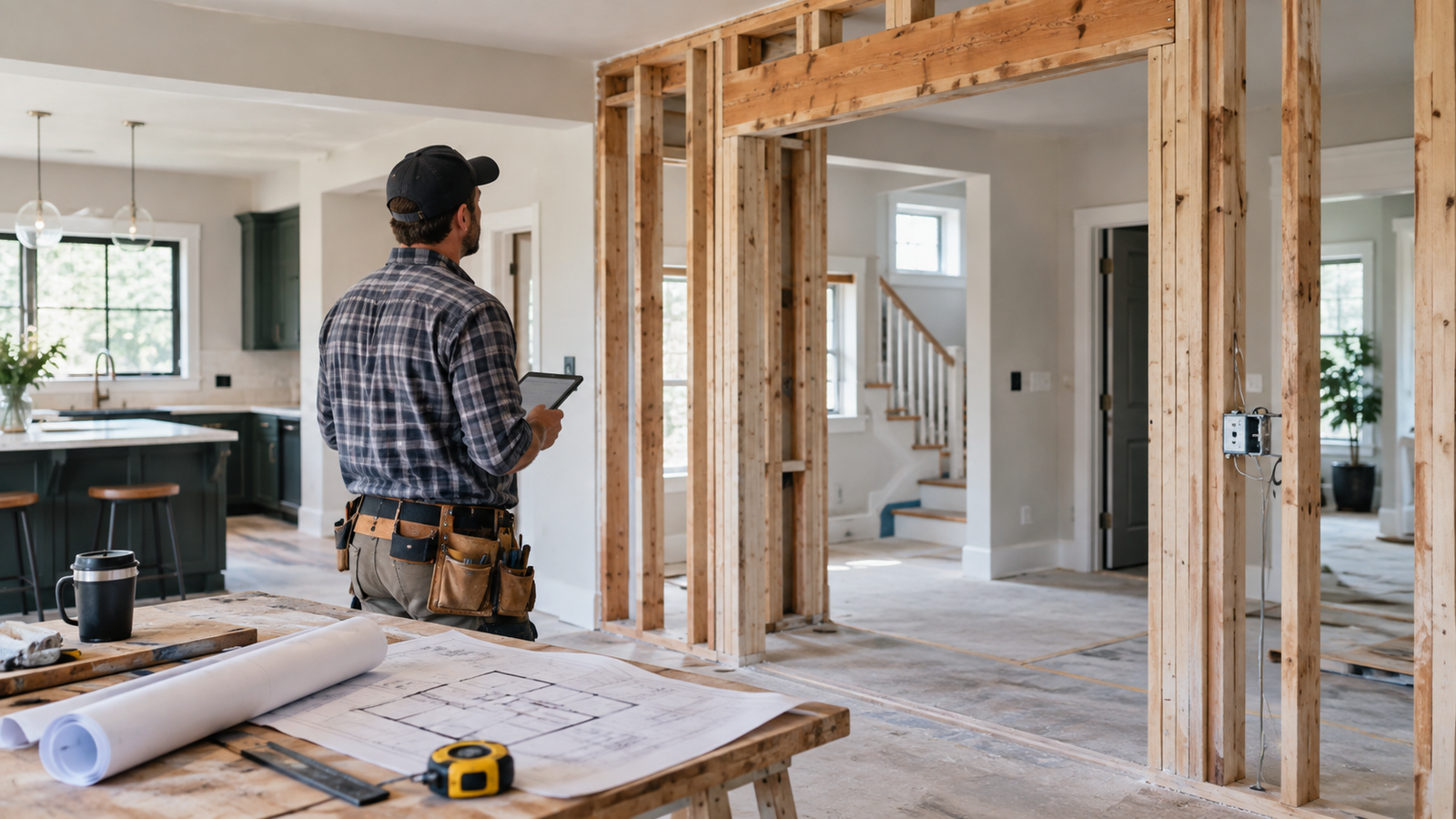

Open-concept remodeling has been one of the most popular home renovation trends for years. Homeowners often want larger, brighter, more connected spaces where the kitchen, dining room, and living room flow together. Instead of separate rooms divided by walls, an open-concept layout creates a shared living area that feels spacious and social.
For many homes, opening up the floor plan can be a major improvement. It can make the house feel larger, improve natural light, create better sightlines, and make entertaining easier. But open-concept remodeling is not the right choice for every home or every family. Removing walls can affect structure, storage, privacy, noise, heating and cooling, furniture placement, and project cost.
Before committing to an open-concept remodel, homeowners should understand both the benefits and the drawbacks. A beautiful open layout starts with more than knocking down a wall. It requires planning, structural review, smart design, and realistic expectations.
Pro: Open-Concept Layouts Make Homes Feel Larger
One of the biggest reasons homeowners choose open-concept remodeling is the sense of space. Removing walls between the kitchen, dining room, and living room can make the main floor feel larger without adding square footage.
This can be especially helpful in older homes where rooms feel small, dark, or closed off. A wall that once divided the kitchen from the dining room may make both spaces feel cramped. Opening that wall can create a more comfortable layout with better movement and visibility.
Even modest homes can feel more spacious when sightlines extend across the main living area. Instead of walking from one small room to another, the home feels more connected and expansive.
However, feeling larger does not always mean functioning better. The design still needs proper zones for cooking, dining, relaxing, storage, and traffic flow.
Con: Removing Walls Can Be Expensive
Open-concept remodeling often costs more than homeowners expect because walls may contain important systems. A wall may be load-bearing, meaning it supports the structure above. It may also contain electrical wiring, plumbing lines, HVAC ducts, gas lines, or return vents.
If a wall is load-bearing, it cannot simply be removed. A contractor, engineer, or qualified professional may need to design a beam or other support system. That can add labor, materials, permits, inspections, and finishing work.
Relocating electrical, plumbing, or HVAC components can also increase the budget. What looks like a simple wall removal may become a complex construction project once the wall is opened.
Before planning an open concept, homeowners should have the wall evaluated. The true cost depends on what the wall does and what must be changed to remove it safely.
Pro: Better Natural Light
Walls block light. When they are removed, sunlight can travel farther through the home. A kitchen that once felt dark may benefit from living room windows. A dining area may feel brighter once it connects to adjacent rooms.
Natural light can make a home feel more inviting, modern, and comfortable. It can also improve the appearance of finishes, flooring, cabinetry, and paint colors. Many homeowners find that open-concept spaces feel more cheerful simply because light moves more freely.
Better light can also make smaller homes feel less boxed in. If your home has good windows but poor interior flow, opening the layout may help maximize the light you already have.
Still, more light may also mean more glare or heat gain depending on window placement. Window treatments, lighting design, and furniture layout should be part of the plan.
Con: Less Privacy
Open-concept homes are social, but they are not private. When the kitchen, dining, and living areas are combined, it becomes harder to separate activities. Someone watching TV may hear kitchen noise. Someone working at the dining table may be distracted by conversations. Kids playing in the living room may be visible and audible from almost everywhere.
This can be frustrating for families who need quiet zones. Remote work, homework, phone calls, reading, and relaxation may be harder in one large shared space.
Older homes often had separate rooms for a reason. Closed-off spaces can provide privacy, noise control, and flexibility. Before removing walls, homeowners should think honestly about how the household uses space every day.
An open layout may be great for entertaining but less ideal for families who need separation.
Pro: Easier Entertaining
Open-concept remodeling is popular because it makes entertaining easier. The person cooking in the kitchen can still talk with guests in the living room or dining area. Food, drinks, and conversation flow more naturally. Large gatherings feel less crowded because people are not separated into small rooms.
For homeowners who host holidays, parties, game nights, or family dinners, an open layout can be a major lifestyle upgrade. It allows the kitchen to become part of the gathering instead of a closed-off workspace.
Open layouts also make it easier to add large islands, flexible seating, and multi-purpose dining areas. The space can adapt to different events more easily than a series of separate rooms.
The key is making sure the kitchen stays functional and attractive, since it will be visible from the rest of the living space.
Con: Kitchen Mess Is Always Visible
One downside of an open-concept layout is that the kitchen is almost always on display. Dirty dishes, countertop clutter, cooking mess, small appliances, trash cans, and meal prep are visible from the living and dining areas.
In a traditional layout, a separate kitchen can hide mess during gatherings or busy weekdays. In an open concept, the kitchen becomes part of the main visual field. That means storage, organization, and layout become even more important.
Homeowners who prefer a clean look may need more cabinetry, a larger pantry, appliance garages, hidden trash storage, and easy-to-clean surfaces. Without good storage planning, an open kitchen can quickly make the entire living area feel cluttered.
Pro: Better Family Connection
Open-concept spaces can help families feel more connected. Parents can cook while keeping an eye on children. Family members can be in different zones but still feel together. Someone preparing dinner can talk to people relaxing nearby.
This is one of the strongest lifestyle benefits of open-concept remodeling. Instead of isolating the kitchen, the main living area becomes a shared hub.
For families with young children, open sightlines can be especially useful. For couples or empty nesters, the layout can create a relaxed, connected atmosphere.
However, connection should be balanced with the need for quiet and personal space. A fully open layout may not be ideal if everyone in the home has different schedules or activities.
Con: Noise Travels Easily
Walls help absorb and block sound. When walls are removed, noise moves more freely. Kitchen appliances, dishwashers, TVs, conversations, music, pets, and children’s activities can all compete in one large space.
Hard surfaces like wood floors, tile, stone countertops, and large windows can make sound bounce even more. An open-concept room may look beautiful but feel loud if acoustics are ignored.
Homeowners can reduce noise with rugs, upholstered furniture, curtains, acoustic panels, soft seating, and thoughtful layout choices. But sound control will never be the same as having separate rooms.
If noise sensitivity is a concern, consider a partially open layout rather than removing every wall.
Pro: More Flexible Furniture and Layout Options
Open spaces can offer more flexibility. Without walls dividing rooms, homeowners can create zones that fit their lifestyle. A dining area can expand for gatherings. A living area can shift around a fireplace, TV, or view. A kitchen island can double as prep space, homework space, and casual seating.
Open-concept layouts can also make traffic flow easier. Instead of narrow doorways and awkward transitions, movement through the main floor feels smoother.
This flexibility is especially helpful during major remodels because homeowners can rethink how the space functions. The layout can be designed around real habits instead of old room divisions.
Con: Furniture Placement Can Be Harder
While open spaces are flexible, they can also be tricky to furnish. Walls provide natural places for sofas, media centers, bookcases, artwork, and storage. When walls are removed, homeowners may struggle to define where one area ends and another begins.
Large open rooms can feel unfinished if furniture is not arranged carefully. Rugs, lighting, ceiling details, furniture grouping, and color choices may be needed to create separate zones.
Storage can also become a challenge. Removing walls may mean losing cabinets, closets, built-ins, or shelving. If storage is not replaced elsewhere, the home may feel less practical after the remodel.
A successful open-concept design needs a furniture and storage plan, not just demolition.
Pro: Open Layouts Can Improve Resale Appeal
Many buyers like open-concept living, especially in kitchens and main gathering areas. A brighter, more connected layout can make a home feel updated and move-in ready.
Open-concept remodeling may improve resale appeal when it is done well, especially if the original layout felt cramped or outdated. Buyers often respond positively to large kitchens, islands, clear sightlines, and better flow.
However, resale value depends on the quality of the work and the preferences of the local market. Poorly planned wall removal, awkward beams, weak lighting, or lack of storage can hurt appeal instead of helping it.
Con: Heating and Cooling May Change
Open-concept remodeling can affect HVAC performance. Removing walls changes airflow, temperature zones, and how the system distributes conditioned air. A space that was once divided into rooms may heat or cool differently after walls are removed.
In some cases, the HVAC system may need duct adjustments, return air changes, or thermostat relocation. Large open rooms with lots of windows may also gain or lose heat differently than smaller enclosed rooms.
If HVAC is ignored during planning, the finished space may have hot spots, cold spots, or comfort issues. Contractors should consider airflow before finalizing the design.
Final Thoughts
Open-concept remodeling can make a home feel brighter, larger, more social, and more modern. It can improve entertaining, family connection, natural light, and flow. But it also comes with trade-offs, including higher construction costs, less privacy, more noise, visible kitchen mess, storage challenges, and possible HVAC changes.
The best open-concept remodels are planned carefully. Before removing walls, homeowners should understand structural requirements, permits, mechanical systems, layout needs, and daily lifestyle habits.
An open layout can be a great choice when it fits the home and the people living in it. But it should be designed for real life, not just for photos.