Poor drainage around the foundation is one of those home problems that can start quietly. At first, you may only notice a puddle near the house after rain, a damp smell in the basement, soil washing out of a flower bed, or mulch floating away from the foundation. Over time, though, poor drainage can contribute to moisture problems, basement water, mold concerns, erosion, damaged landscaping, and stress around the home’s lower structure.
A home does not need to flood for drainage to be a problem. Water that repeatedly collects near the foundation can create long-term issues even if it eventually dries out. The goal is to move water away from the house before it has a chance to sit against foundation walls, seep into lower areas, or soften the soil around the home.
Homeowners do not need to become drainage experts, but they should know the warning signs. If you can spot poor drainage early, you may be able to correct small problems before they turn into expensive repairs.
Water Pools Near the Foundation After Rain
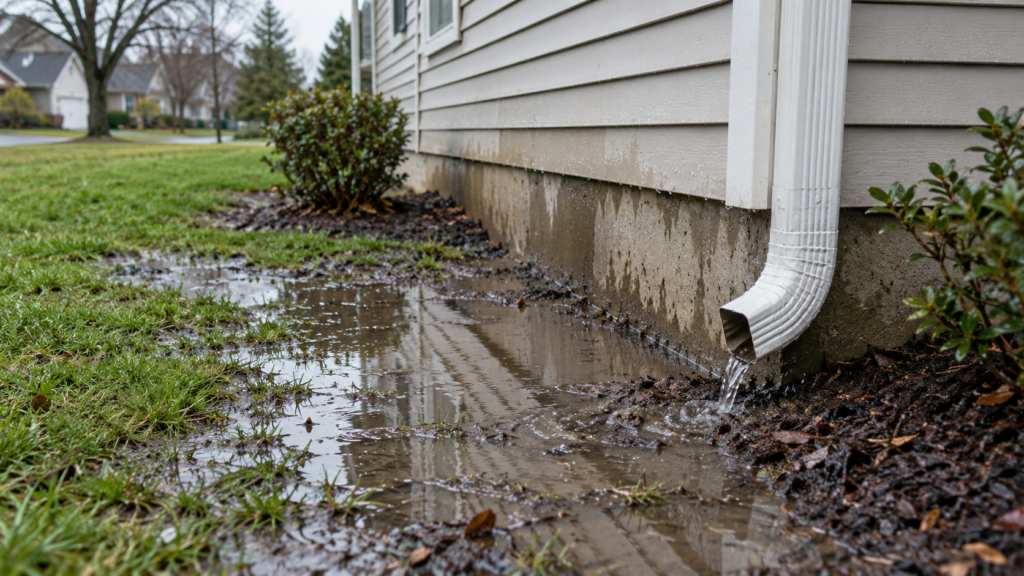
One of the clearest signs of poor drainage is standing water near the foundation after rain. A small puddle may not seem serious, especially if it disappears by the next day, but repeated pooling is worth paying attention to.
Water should move away from the home, not sit against it. FEMA’s flood protection guidance recommends maintaining proper runoff and drainage, including gutters, downspouts, splash pads, drainage ditches, and storm drains so water moves away from the home rather than collecting near it. (fema.gov)
After a storm, walk around the outside of your home and look for puddles along the foundation, near basement windows, beside patios, under downspouts, or along low spots in the yard. If the same areas collect water repeatedly, the grading, gutters, downspouts, soil, or drainage system may need attention.
Contractors Candy’s article on what are the signs your home needs better drainage is a helpful related resource for identifying broader yard drainage issues.
Soil Slopes Toward the House
The ground around your home should help move water away from the foundation. If the soil slopes toward the house, rainwater naturally flows in the wrong direction.
This can happen because of poor original grading, settling soil, erosion, landscaping changes, or new hardscaping that redirects water. Flower beds, walkways, patios, driveways, and retaining walls can all affect how water moves.
A quick visual check can tell you a lot. Step back from the house and look at the grade. Does the soil drop away from the foundation, or does it seem to tilt toward the home? Are there low pockets next to the wall? Has mulch built up too high against siding? Does water flow toward a basement window or crawl space vent?
Building science guidance commonly emphasizes sloping grade away from the house as part of foundation water management, along with gutters, perimeter drainage, and materials that reduce water saturation near the foundation. (bsesc.energy.gov)
If the slope is wrong, the home may need regrading, drainage correction, or adjustments to landscaping.
Downspouts Dump Water Too Close to the House
Gutters and downspouts are supposed to collect roof runoff and send it away from the foundation. If downspouts discharge too close to the house, they may be adding hundreds of gallons of water near the foundation during heavy rain.
Watch where your downspouts release water. Do they end right beside the foundation? Are the extensions missing? Do splash blocks point the wrong way? Does water run back toward the house after leaving the downspout?
University of Georgia Extension recommends checking that gutters and downspouts are intact, free of debris, and directing water away from the house, with downspouts extending 6 to 10 feet from the foundation. (extension.uga.edu)
Contractors Candy’s article on how to know if your gutters are causing home damage explains why gutters and downspouts are a major part of home moisture control.
Gutters Overflow During Rain
Overflowing gutters can make foundation drainage worse. Instead of directing water through downspouts, clogged or undersized gutters may spill water directly over the edge of the roof. That water can land near the foundation, damage landscaping, erode soil, stain siding, or contribute to basement moisture.
Signs of gutter overflow include water pouring over the sides during rain, soil trenches beneath the roofline, mulch displacement, stained siding, sagging gutters, and plant beds that look washed out after storms.
Gutter overflow is often caused by leaves, shingle granules, debris, poorly sloped gutters, disconnected downspouts, or gutters that are not sized well for the roof area. If the issue happens only during heavy rain, the gutter system may still need attention.
NC State Extension notes that gutter and downspout systems should keep water from pooling around the foundation and should be kept open and in good repair. (content.ces.ncsu.edu)
Basement or Crawl Space Smells Musty
Poor drainage outside can show up as musty odors inside. If water collects around the foundation, moisture may find its way into basements, crawl spaces, or lower-level walls. Even when there is no visible puddle inside, excess moisture can create a damp smell.
Musty odors should not be ignored. They may point to wet materials, poor ventilation, hidden mold growth, damp insulation, or water seepage. The EPA explains that mold prevention depends on moisture control and that mold problems should be addressed by cleaning up the mold and fixing the water problem. (epa.gov)
If the odor is strongest after rain, drainage should be considered as a possible cause. Contractors Candy’s guide on what homeowners should know about mold prevention during remodeling explains why moisture sources need to be fixed before new materials cover problem areas.
Water Stains Appear on Basement Walls
Water stains, damp patches, peeling paint, efflorescence, or discoloration on basement walls can all point to moisture around the foundation. Efflorescence often looks like white, chalky residue and can appear when water moves through masonry and leaves mineral deposits behind.
These signs do not always mean the foundation is failing, but they do mean water is interacting with the wall. The source may be poor exterior drainage, clogged gutters, grading issues, cracks, hydrostatic pressure, or plumbing problems.
Look at when the stains appear. Do they worsen after rain? Are they near a corner, window well, downspout, or low spot outside? Are they close to where the yard slopes toward the house?
If moisture marks are present, do not simply paint over them. The underlying water source should be identified first.
Window Wells Collect Water
Basement window wells can become drainage trouble spots if they collect leaves, soil, or standing water. A window well should not act like a bowl that holds rainwater against the window.
Warning signs include water pooling in the well, rusted window frames, stained basement walls beneath the window, debris buildup, cracked covers, or water entering during storms. Poor grading around the well can also make the problem worse.
If window wells fill with water repeatedly, the issue may involve clogged drains, low soil, poor covers, or runoff from gutters and hardscaping. Fixing the problem may require cleaning, drainage improvement, cover replacement, or grading changes.
Window wells are easy to overlook until water shows up inside. Checking them after rain can help catch problems early.
Mulch or Soil Washes Away Near the Home
Erosion near the foundation is another warning sign. If mulch, soil, gravel, or landscaping material keeps washing away from the same area, water is moving with enough force to displace it.
This can happen under overflowing gutters, near downspouts, at roof valleys, along sloped beds, or where hardscaping directs water toward the house. Over time, erosion can create low spots that hold even more water.
Erosion can also expose roots, shift pavers, undermine plant beds, and make the yard look messy after every storm. More importantly, it can change the grade around the home in a way that sends more water toward the foundation.
If you keep replacing mulch in the same area, step back and ask why it keeps moving.
Cracks or Settling Appear Around Walkways and Patios
Drainage problems can affect hardscaping near the home. If water repeatedly softens or washes soil beneath walkways, patios, steps, or driveway edges, those surfaces may settle, crack, or slope toward the house.
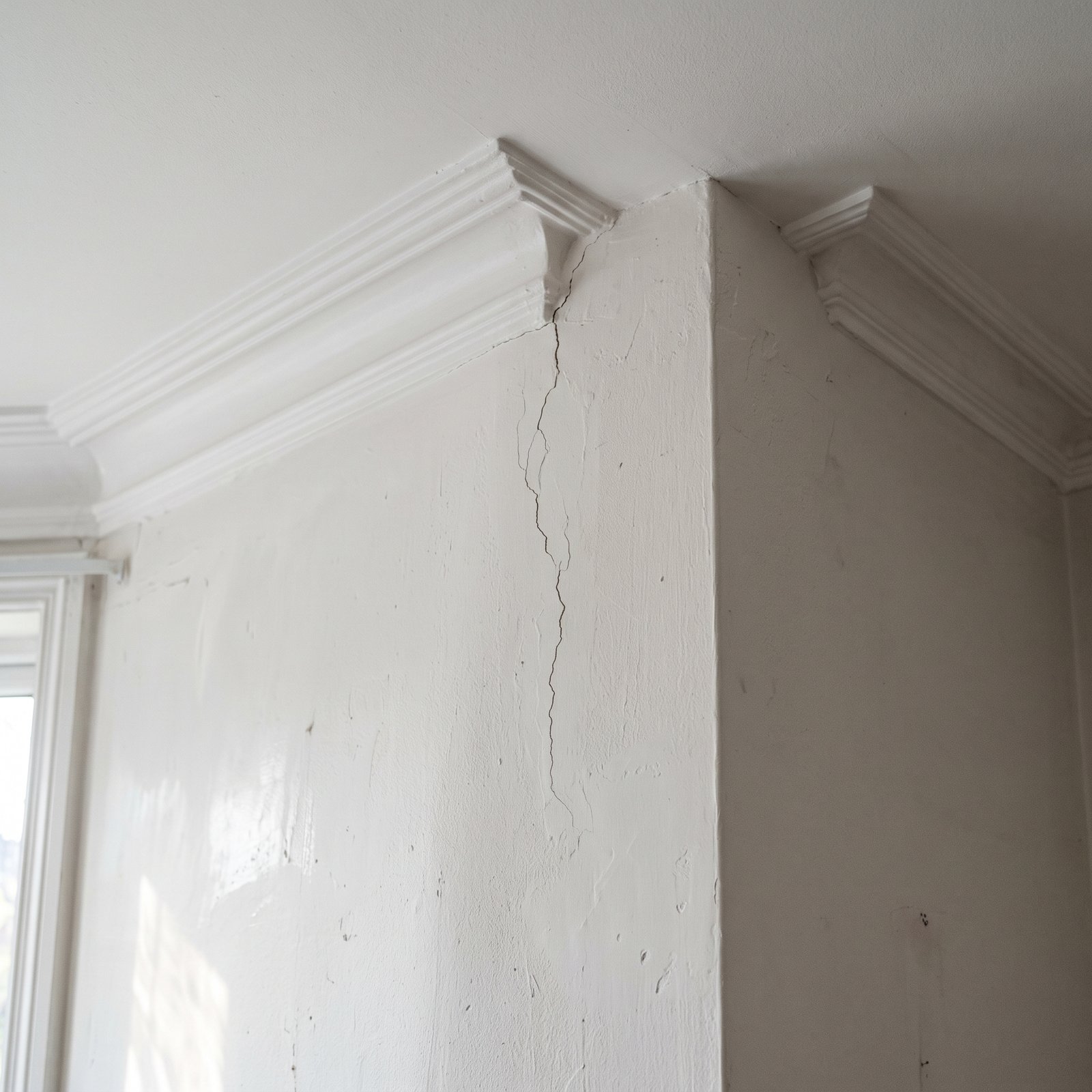
Cracks do not always mean there is a drainage issue, but they are worth investigating when paired with pooling water, erosion, or foundation moisture. A patio that pitches toward the foundation can send runoff directly to the house. A settled walkway can trap water beside the wall. A driveway edge can channel water toward a garage or basement.
Contractors Candy’s article on what to know about building a deck or patio can help homeowners think through outdoor surfaces, drainage, and planning before adding or repairing hardscaping.
Landscaping Is Holding Water Against the Foundation
Landscape beds can accidentally create drainage problems. Raised beds, dense plantings, edging, decorative stone, compacted soil, and thick mulch can all hold water near the house if not designed carefully.
A common issue is piling mulch too high against the foundation or siding. Another is building a landscape bed that creates a dam, trapping water near the house instead of letting it flow away.
Plants near the foundation can also hide damp soil, pest activity, or foundation staining. While foundation landscaping can look attractive, it should not block inspection or interfere with drainage.
If the soil in beds near the house stays soggy long after rain, the landscaping may need to be reworked.
The Yard Stays Soggy in the Same Areas
A soggy yard can be caused by compacted soil, poor grading, underground drainage problems, irrigation issues, or runoff from neighboring properties. If the soggy area is close to the foundation, it becomes more concerning.
Walk the yard a day or two after rain. Are there areas that stay wet longer than the rest of the property? Does water sit near the home? Does runoff from the roof, driveway, patio, or neighbor’s yard collect in one spot?
Yard drainage problems may require swales, regrading, French drains, downspout extensions, dry wells, or other solutions depending on the site. The right fix depends on why the water is collecting.
Avoid guessing. A drainage solution that works for one property may not work for another.
Interior Humidity Feels High
Poor foundation drainage can contribute to higher indoor humidity, especially in basements and crawl spaces. If the lower level feels damp, smells musty, or has condensation on windows or pipes, moisture may be entering from outside or collecting in hidden areas.
The EPA’s mold guidance emphasizes that controlling moisture is the key to preventing mold growth. (epa.gov) If the home has high humidity, the solution may involve ventilation, dehumidification, drainage correction, air sealing, or moisture source repair.
Contractors Candy’s article on why proper ventilation matters in every home explains how moisture, airflow, and indoor comfort connect.
Water Problems Show Up After Storms
Some drainage issues only become obvious after major storms. A normal rain may not reveal the problem, but heavy rainfall can overwhelm gutters, downspouts, swales, drains, and low areas.
After a major storm, inspect the outside of the home. Look for erosion, pooling, washed-out mulch, clogged downspouts, water marks on foundation walls, wet basement corners, or debris blocking drainage paths.
Contractors Candy’s guide on what to check around your home after a major storm is a useful checklist for catching exterior issues before they become bigger problems.
When to Call a Professional
Some drainage fixes are simple, such as cleaning gutters, adding downspout extensions, or correcting small low spots. Others require professional evaluation.
Call a professional if water repeatedly enters the basement, foundation walls stay damp, cracks are spreading, the yard slopes toward the house, hardscaping directs water at the foundation, window wells fill with water, or previous DIY fixes have not worked.
You may need a drainage contractor, landscaper, gutter specialist, foundation professional, basement waterproofing contractor, or general contractor depending on the problem. If the issue is connected to a remodel, solve the drainage problem before installing new finished materials.
Contractors Candy’s article on what homeowners should know before converting a basement into living space explains why moisture control should come before finishing basement walls and floors.
Final Thoughts
Poor drainage around the foundation can show up in many ways: pooling water, wrong soil slope, short downspouts, overflowing gutters, musty smells, basement stains, wet window wells, erosion, soggy landscaping, cracked hardscaping, and high indoor humidity.
The most important thing is to treat water as a direction problem. Rainwater should move away from the house, not toward it. Gutters, downspouts, grading, landscaping, hardscaping, and drainage systems should all work together to keep moisture away from the foundation.
If you notice the same wet spots after every storm, do not ignore them. Fixing drainage early can help protect your foundation, basement, crawl space, landscaping, and indoor air quality before moisture turns into a larger home repair issue.