Roof flashing is one of the most important parts of a roofing system, but many homeowners do not think about it until there is a leak. Shingles, tiles, or metal panels may cover the largest parts of the roof, but flashing protects the areas where water is most likely to sneak in.
Flashing is usually installed around roof edges, chimneys, skylights, vents, dormers, valleys, walls, and other transitions. These are the places where the roof changes direction, meets another surface, or has something passing through it. Without properly installed and maintained flashing, water can enter through small gaps and cause damage inside the home.
A roof leak is not always caused by missing shingles or storm damage. Sometimes the problem starts with a loose piece of flashing, cracked sealant, corroded metal, poor installation, or an old repair that no longer holds. Understanding roof flashing can help homeowners spot warning signs earlier and ask better questions during roof inspections or repairs.
What Is Roof Flashing?
Roof flashing is a water-shedding material used to protect vulnerable areas of the roof. It is often made from metal, but flashing materials can vary depending on the roofing system, location, and building design.
The main job of flashing is simple: direct water away from openings, seams, joints, and transitions. The Building Science Education Solution Center explains that the roof is a home’s first major defense against water intrusion, and flashing is part of a water-managed roof assembly.
Think of flashing as a bridge between surfaces. Where a roof meets a wall, flashing helps prevent water from running behind the siding. Around a chimney, flashing helps keep rain from entering the gap between the chimney and roof. Around vents and skylights, flashing helps protect the edges where those features interrupt the roof surface.
When flashing works correctly, water moves down and off the roof. When flashing fails, water may travel behind materials, under shingles, into the attic, or down inside walls.
Why Flashing Is So Important
Most roof surfaces are designed to shed water across broad areas. The problem is that roofs are rarely one uninterrupted plane. They have corners, edges, penetrations, transitions, valleys, slopes, and changes in material. Those details are where leaks often begin.
The Insurance Institute for Business & Home Safety notes that roof detailing, including flashing, should be inspected regularly because these areas can be vulnerable to aging and exposure. IBHS roof-aging guidance also points out that roofs react differently to weather over time depending on materials and details.
Flashing matters because water is persistent. It can follow gravity, wind pressure, surface tension, and tiny gaps. A small opening around flashing may not leak during every rainstorm, but wind-driven rain or heavy downpours can expose the weakness.
That is why homeowners should not think of flashing as a minor accessory. It is a key part of how the roof protects the home.
Common Places Flashing Is Installed
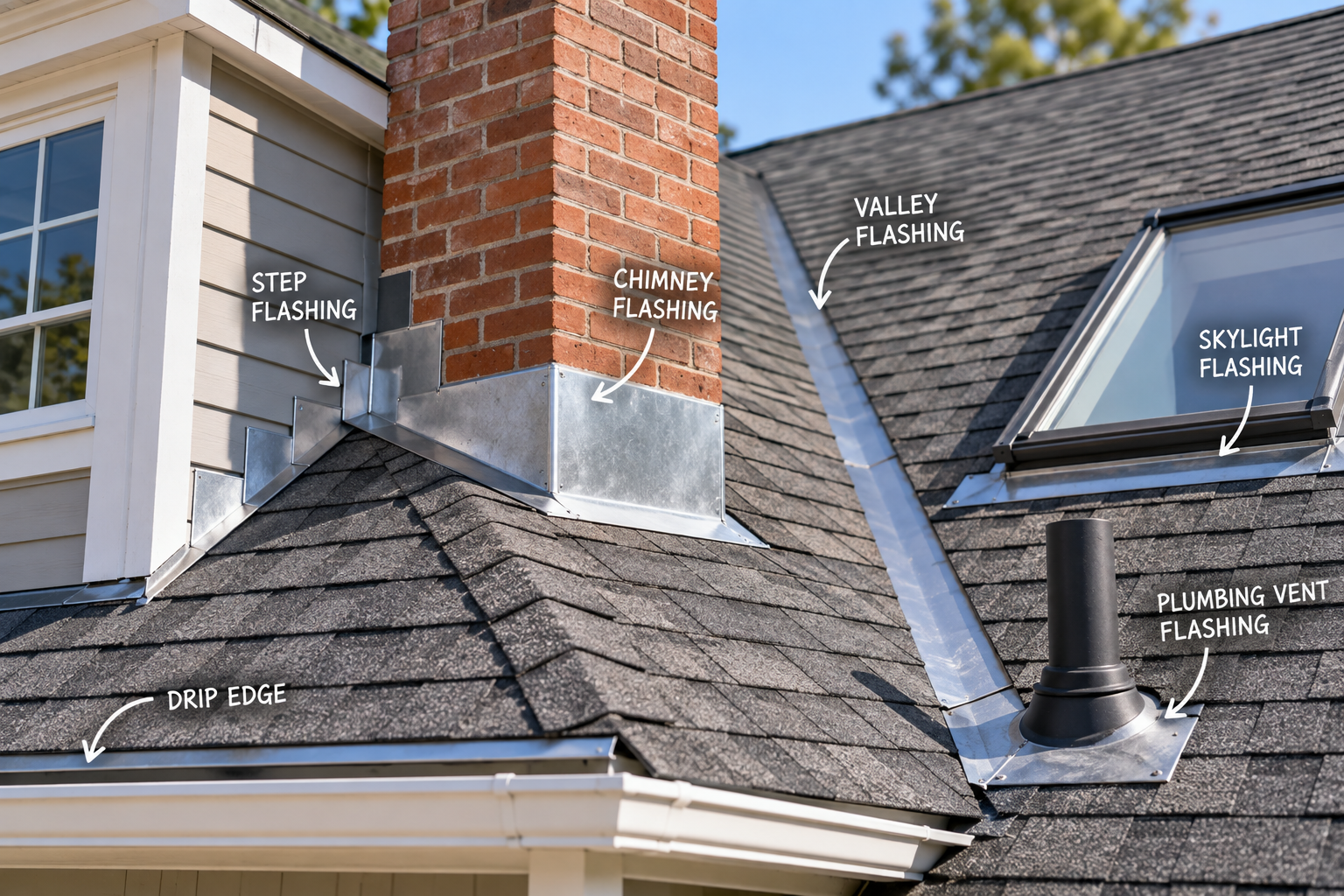
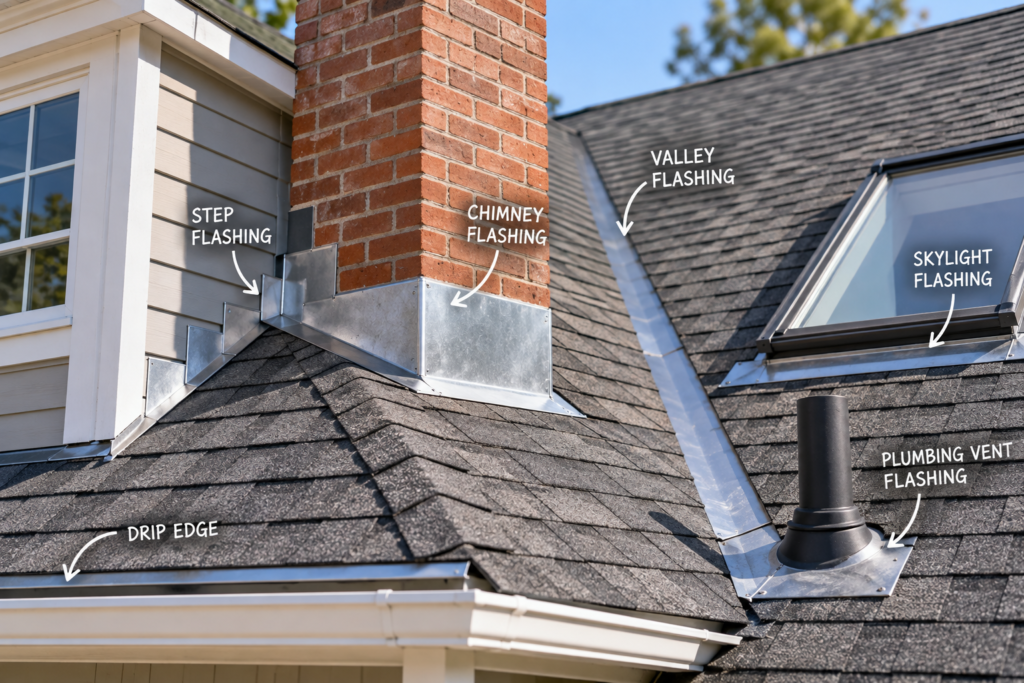
Flashing can be found in several areas of the roof. Some of the most common include chimneys, skylights, plumbing vents, roof valleys, dormers, walls, eaves, rakes, and roof edges.
Step flashing is often used where a roof meets a vertical wall. It is installed in overlapping pieces so water can move down the roof without getting behind the wall. The Building Science Education Solution Center explains that step flashing protects walls from water intrusion at roof-wall intersections.
Chimney flashing usually includes multiple parts because chimneys have several sides and corners. Skylights also need careful flashing because they create a large opening in the roof surface. Plumbing vents often use boot flashing or vent flashing to seal around the pipe.
Roof valleys are another important area because water from two roof slopes meets and flows through a concentrated channel. If valley flashing is damaged or clogged with debris, leaks can develop.
Signs Roof Flashing May Be Failing
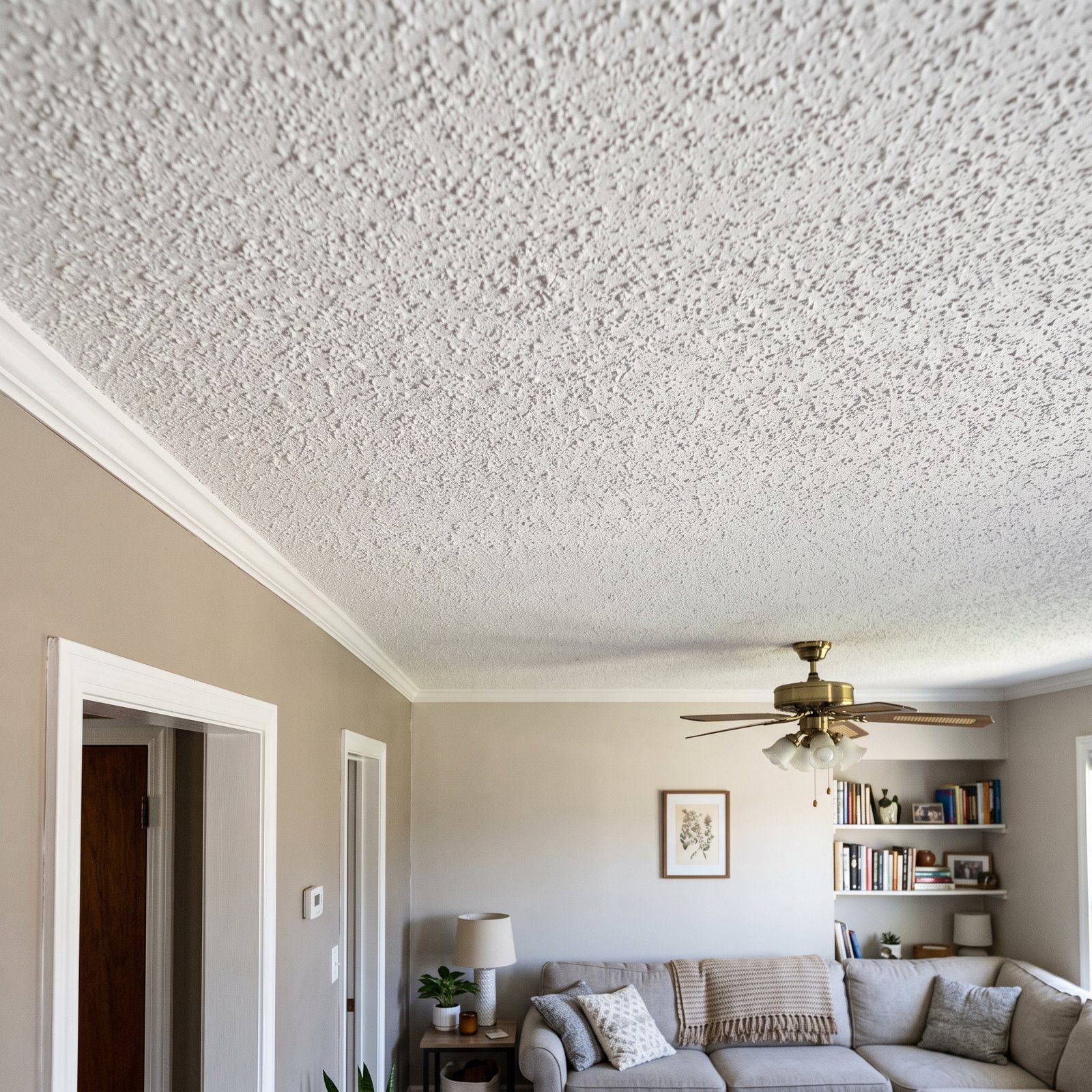
Flashing problems are not always obvious from the ground, but there are warning signs homeowners can watch for. Interior signs may include ceiling stains, damp attic insulation, peeling paint, musty odors, or water marks near walls, chimneys, skylights, or upper corners.
Exterior warning signs may include rusted flashing, lifted metal, missing pieces, cracked sealant, gaps around vents, loose chimney flashing, damaged shingles near a transition, or debris buildup in valleys.
If a leak appears only during heavy rain or wind-driven rain, flashing may be one possible cause. Wind can push water into places that ordinary rainfall may not reach. IBHS has researched how wind-driven rain can enter homes through vulnerable openings in roof systems and building assemblies. IBHS wind-driven rain research explains why water intrusion can happen when rain is pushed into openings during severe weather.
Contractors Candy’s article on what to check around your home after a major storm is a useful related resource because roof details, gutters, siding, drainage, and exterior damage should all be reviewed after rough weather.
Flashing Can Fail Because of Age
Like the rest of the roof, flashing ages. Metal can corrode. Sealants can dry out. Fasteners can loosen. Roofing materials around flashing can shift. Temperature changes can cause expansion and contraction. Old repairs can deteriorate.
A roof may look acceptable from a distance while flashing details are wearing down. This is especially common around chimneys, vents, skylights, and roof-wall intersections. These areas handle a lot of water movement and are exposed to sun, rain, wind, and debris.
Flashing age is one reason roof inspections matter. A homeowner may not safely see the condition of flashing from the ground, but a roofing professional can check whether it is still properly secured and directing water correctly.
Contractors Candy’s guide on understanding roof inspections can help homeowners understand what a roof inspection may include and why roof details should not be overlooked.
Flashing Can Fail Because of Poor Installation
Even newer flashing can leak if it was not installed correctly. Flashing must overlap properly, integrate with the roofing material, and direct water out instead of trapping it. If pieces are reversed, missing, sealed incorrectly, or installed without proper layering, water can get behind the system.
Poor flashing work may not fail immediately. A roof can appear fine during light rain but leak during wind, heavy rain, or after materials age. Problems may also show up after a roof repair, siding replacement, chimney repair, skylight installation, or window/roofline modification.
This is one reason the lowest estimate is not always the best choice. Flashing details require care. A rushed or incomplete repair can create hidden water paths that lead to interior damage later.
Contractors Candy’s article on how to compare contractor estimates without choosing the cheapest bid is helpful when comparing roofing or exterior repair scopes.
Chimney Flashing Deserves Special Attention
Chimneys are common leak points because they interrupt the roof surface and create multiple seams. Proper chimney flashing usually includes base flashing, step flashing, counterflashing, and sometimes a cricket or saddle depending on the chimney size and roof design.
If chimney flashing is loose, cracked, rusted, or separated from the masonry, water can enter around the chimney and travel into the attic or ceiling. Interior stains near a fireplace or chimney chase may point to flashing trouble, though other chimney issues can also cause leaks.
Homeowners should avoid assuming that caulk alone can solve a chimney leak. Sealant may be part of certain repairs, but flashing is meant to manage water movement. If the flashing is damaged or poorly installed, adding more caulk may only provide a temporary fix.
Skylight Flashing Can Be Tricky
Skylights bring in natural light, but they also create a large roof opening. That opening must be flashed correctly to prevent leaks around the frame.
A skylight leak may come from flashing, worn seals, condensation, cracked glazing, improper installation, or roof damage around the skylight. If water stains appear below a skylight, homeowners should not automatically assume the skylight itself is defective. The surrounding flashing and roofing materials may be involved.
Skylight flashing should be inspected after storms, roof repairs, or when the skylight is older. Debris buildup above the skylight can also slow drainage and increase the chance of water problems.
Roof Valleys Need Clear Water Flow
Roof valleys collect water from two slopes, which means they handle more runoff than many other roof areas. Flashing in valleys helps guide water downward and off the roof.
If leaves, branches, granules, or debris collect in a valley, water may slow down or back up. If valley flashing is damaged, corroded, or poorly integrated with shingles, water may find a path beneath the roof covering.
This is why roof maintenance should include checking valleys from a safe location or during professional service. Homeowners should not climb onto the roof to clear valleys if it is unsafe, steep, wet, or damaged.
Contractors Candy’s article on roof maintenance tips to extend the life of your roof covers broader roof care habits that can help reduce preventable issues.
Flashing Problems Can Affect the Attic
A flashing leak may show up in the attic before it reaches the living space. Damp insulation, stained roof decking, rusted nails, musty odors, or water trails may indicate water entry from above.
Because flashing is often located near roof penetrations and transitions, attic signs may appear around chimneys, vents, walls, or valleys. However, water can travel before it becomes visible, so the stain may not be directly under the leak source.
If you notice attic moisture after rain, do not ignore it. Moisture in the attic can affect insulation, wood, indoor air quality, and ceiling materials.
Contractors Candy’s guide on what homeowners should know about attic ventilation is useful because attic conditions, ventilation, and moisture problems often overlap.
Do Not Rely on Caulk as a Long-Term Fix
Caulk and roofing sealants have their place, but they are not a substitute for proper flashing. A quick bead of sealant may temporarily slow a leak, but it may not correct the underlying problem.
Sealant can crack, shrink, pull away, or deteriorate in sun and weather. If flashing is loose, missing, corroded, or installed incorrectly, a surface patch may only hide the issue for a short time.
This is especially important around chimneys, skylights, vents, and roof-wall intersections. A lasting repair may require replacing or resetting flashing, correcting overlaps, repairing surrounding shingles, or addressing damaged materials beneath the surface.
Contractors Candy’s article on why missing shingles should be repaired quickly is relevant because exposed or damaged roof areas can make flashing problems worse.
Flashing Should Be Checked During Roof Replacement
If you are replacing your roof, ask how flashing will be handled. Some flashing may be reusable in limited situations, but damaged, old, rusted, or poorly installed flashing should usually be addressed during the project.
A new roof installed around bad flashing can still leak. That is why the flashing scope should be clear in the estimate. Ask whether chimney flashing, step flashing, valley flashing, drip edge, vent flashing, and skylight flashing are included, replaced, repaired, or inspected.
Contractors Candy’s article on the difference between roof repair and roof replacement can help homeowners understand when a targeted repair may be enough and when a larger roof project may make more sense.
When to Call a Roofing Professional
Homeowners should call a professional if they notice ceiling stains, leaks near chimneys or skylights, damp attic areas, rusted flashing, loose metal, cracked sealant, missing shingles near roof transitions, or repeated leaks in the same area.
The National Roofing Contractors Association encourages homeowners and business owners to assess roof damage from ground level and not attempt roof repairs on their own after storms. NRCA storm repair guidance is a good reminder that roof work can be dangerous and should be handled carefully.
A professional can determine whether the issue is flashing, shingles, underlayment, vents, gutters, siding, or another source. Since water can travel, diagnosing a leak correctly matters.
Final Thoughts
Roof flashing is a small-looking detail with a major job. It protects the parts of the roof where leaks are most likely to start: chimneys, skylights, vents, valleys, roof edges, and roof-wall intersections.
When flashing is damaged, loose, poorly installed, corroded, or covered with failing sealant, water can enter the home and cause problems in the attic, ceiling, walls, or insulation. The warning signs may be subtle at first, but they should not be ignored.
Homeowners should check for visible issues from the ground, watch for interior moisture signs, ask about flashing during roof inspections, and make sure flashing is addressed during roof repairs or replacement. A roof is only as reliable as its weakest detail, and flashing is one of the details that deserves attention.